Photographs: Laura Gaiger / Susann Jamtøy / Trøndelag Senter for Samtidskunst

Exhibition text, by Margrete Abelsen (translated to English):
“For the sea is his, he owns it, as Emperors own Empires.”
- Herman Melville: Moby-Dick: or The Whale (1851)


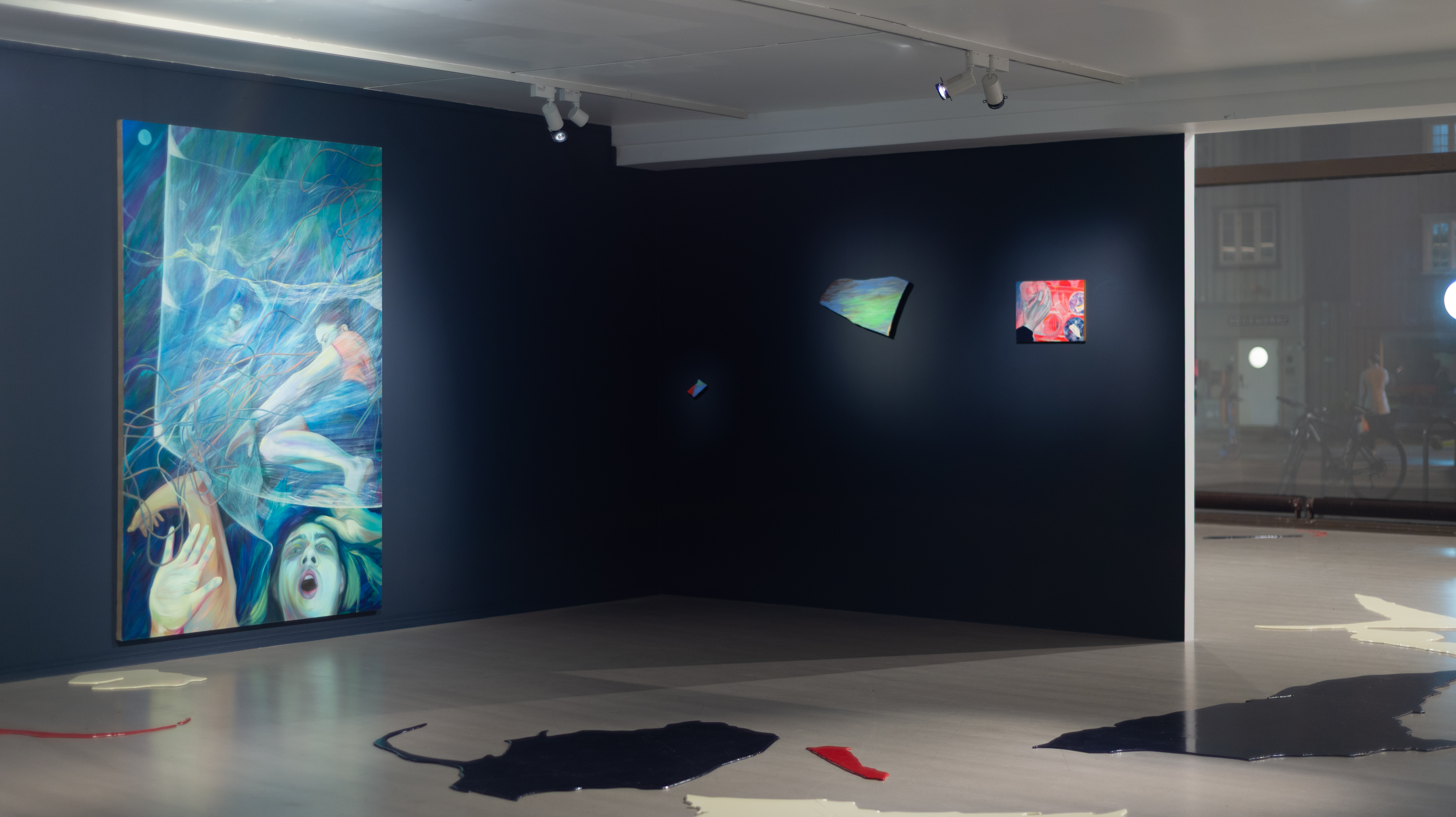
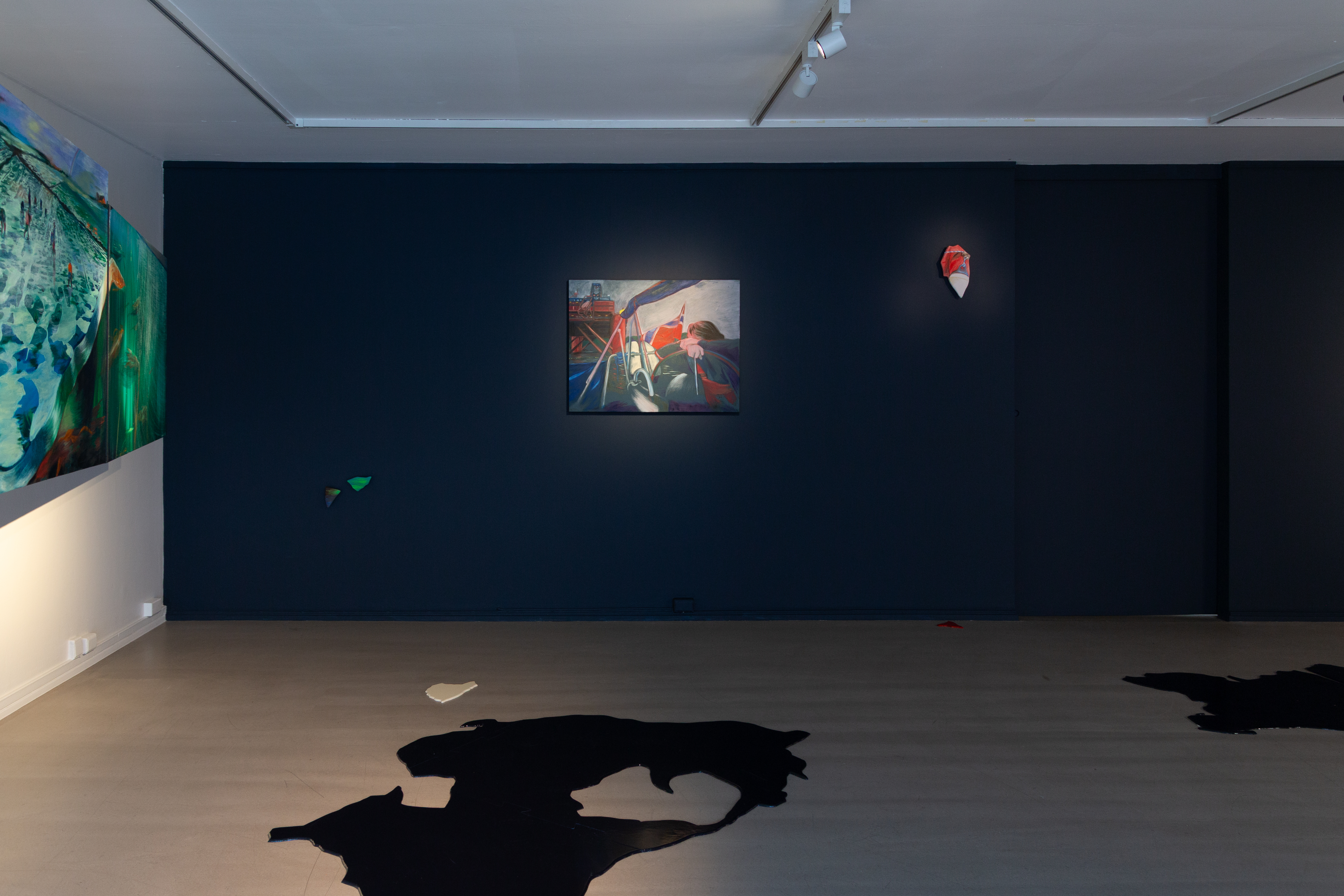
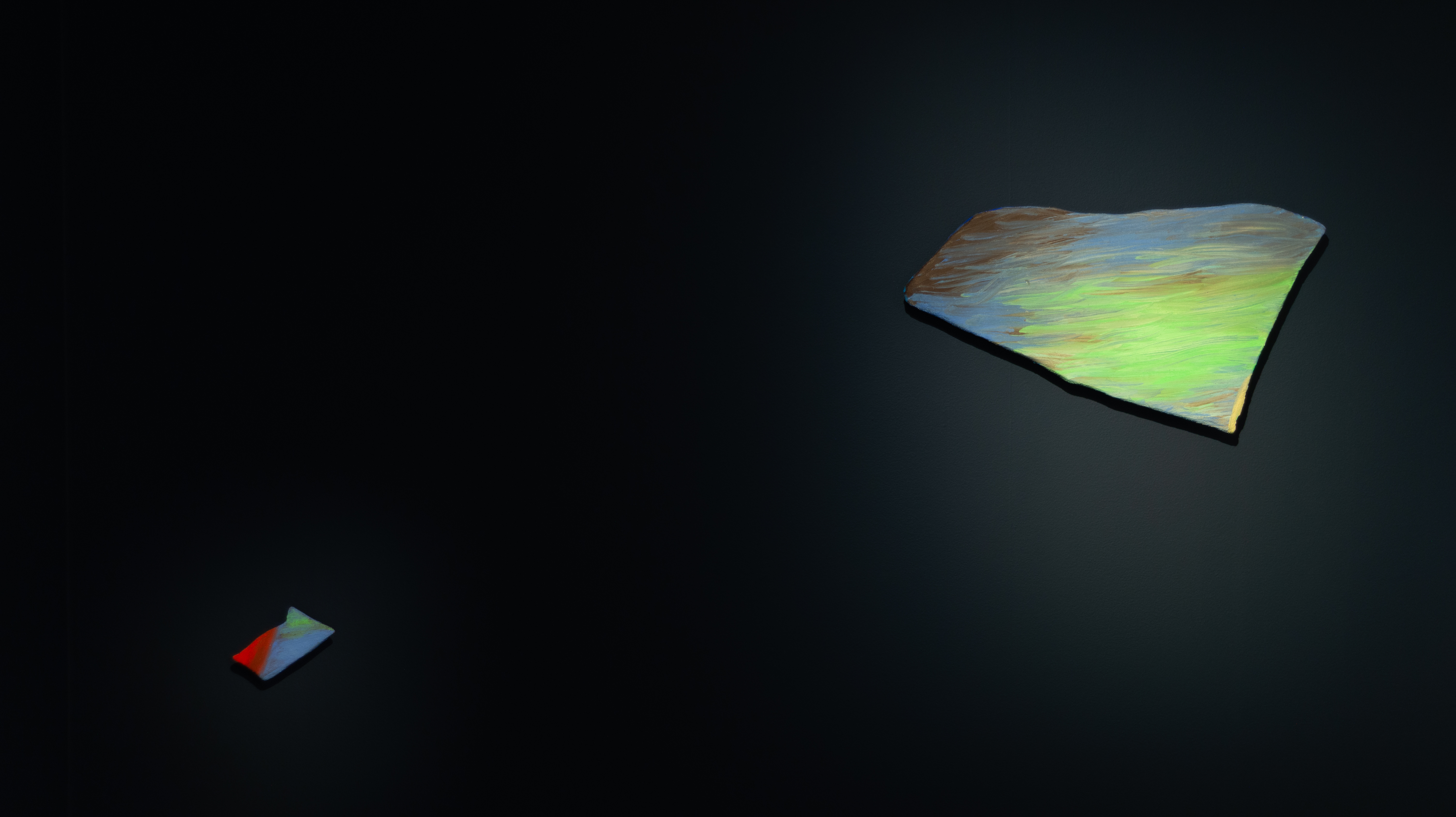
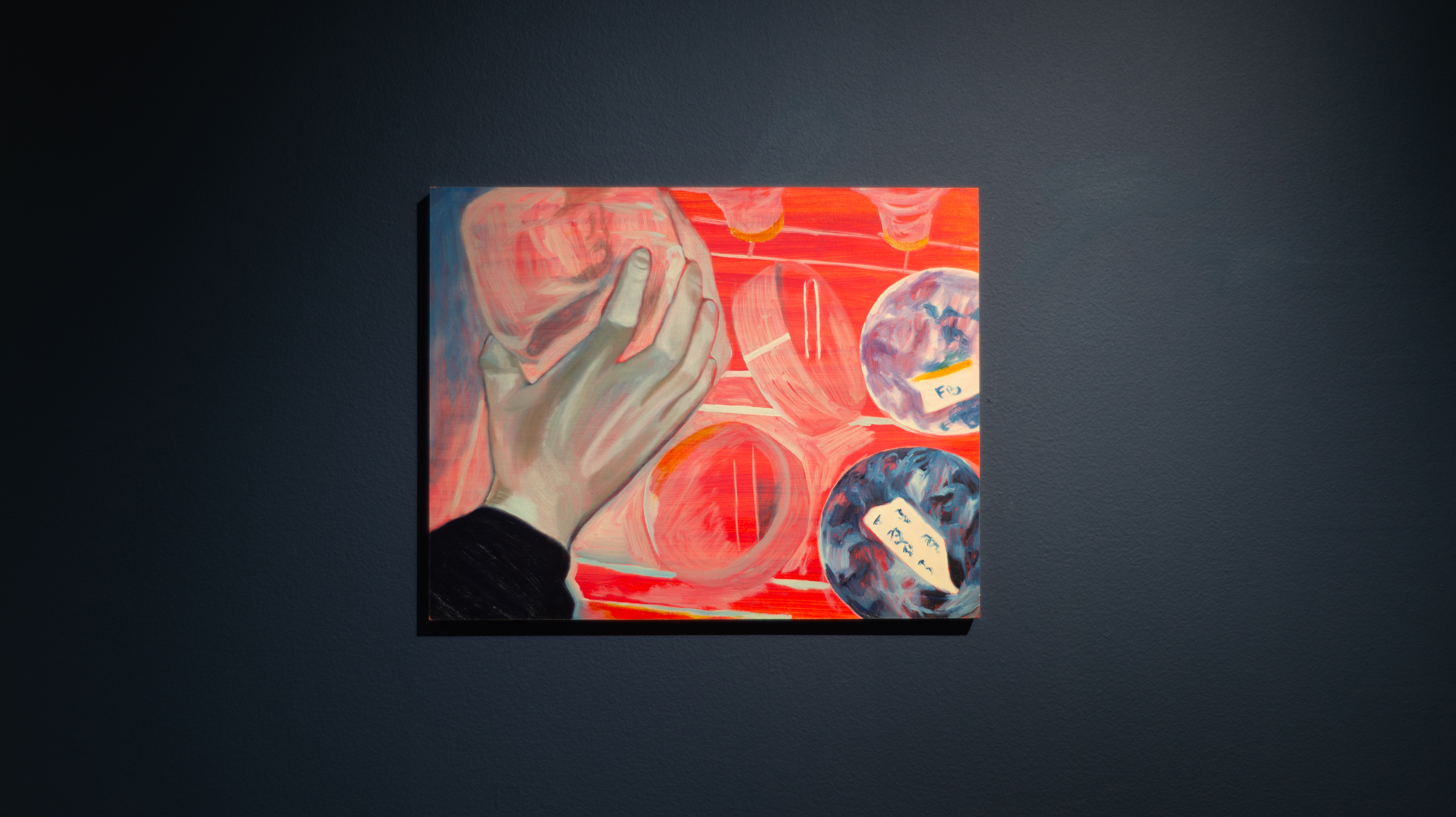
In As Emperors Own Empires, English-born landscape painter Laura Gaiger explores humanity’s relationship with the sea, as a force of nature, political landscape, and common resource. Through a total installation of monumental paintings on canvas and canvas, small, brightly colored frescoes, and carved floor works, she examines how imperial, economic, and national interests intervene in ecological and social contexts. There are also stories of how individuals and small local communities resist forms of control. In this rich visual, sensory, and political exhibition, the referentially rich works also contain an examination of the human urge to control nature and our vulnerability to the forces we try to tame.

How do you read a landscape? Laura Gaiger insists that she is a landscape painter. This is related to her understanding of the landscape as a space where people's experiences, stories and actions unfold. In this sense, the landscape is not just nature, but a social place, with a socio-political history. Landscape painting has historically portrayed nature as an idealized and unchanging image of identity, rather than as a living and changing space. In order to break down the romantic notion of nature as something separate from us, Gaiger allows human stories, conflicts and dreams to be folded into the landscape. In this way, the painting becomes a place where the relationship between people, surroundings and nature can be re-examined.

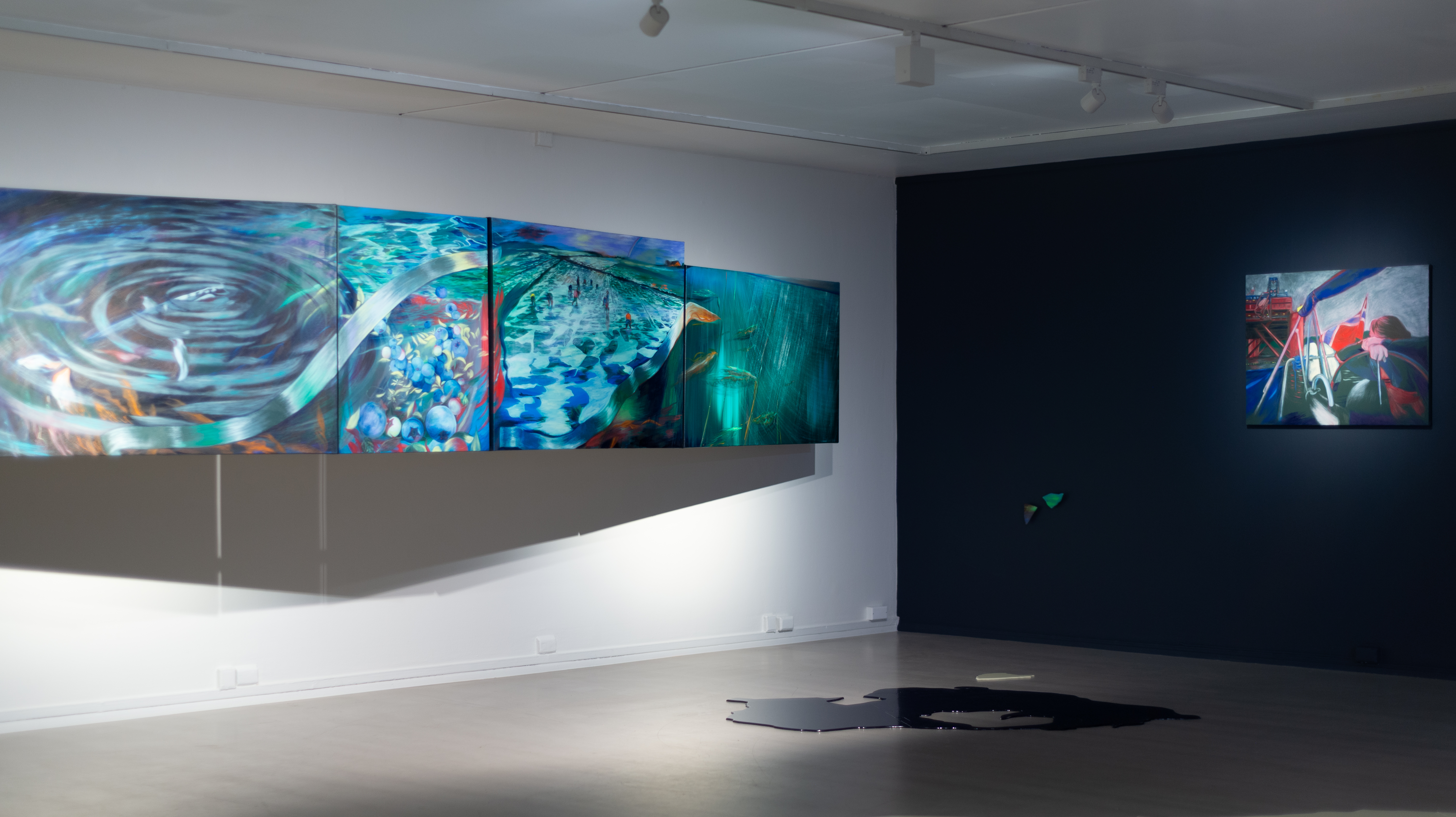
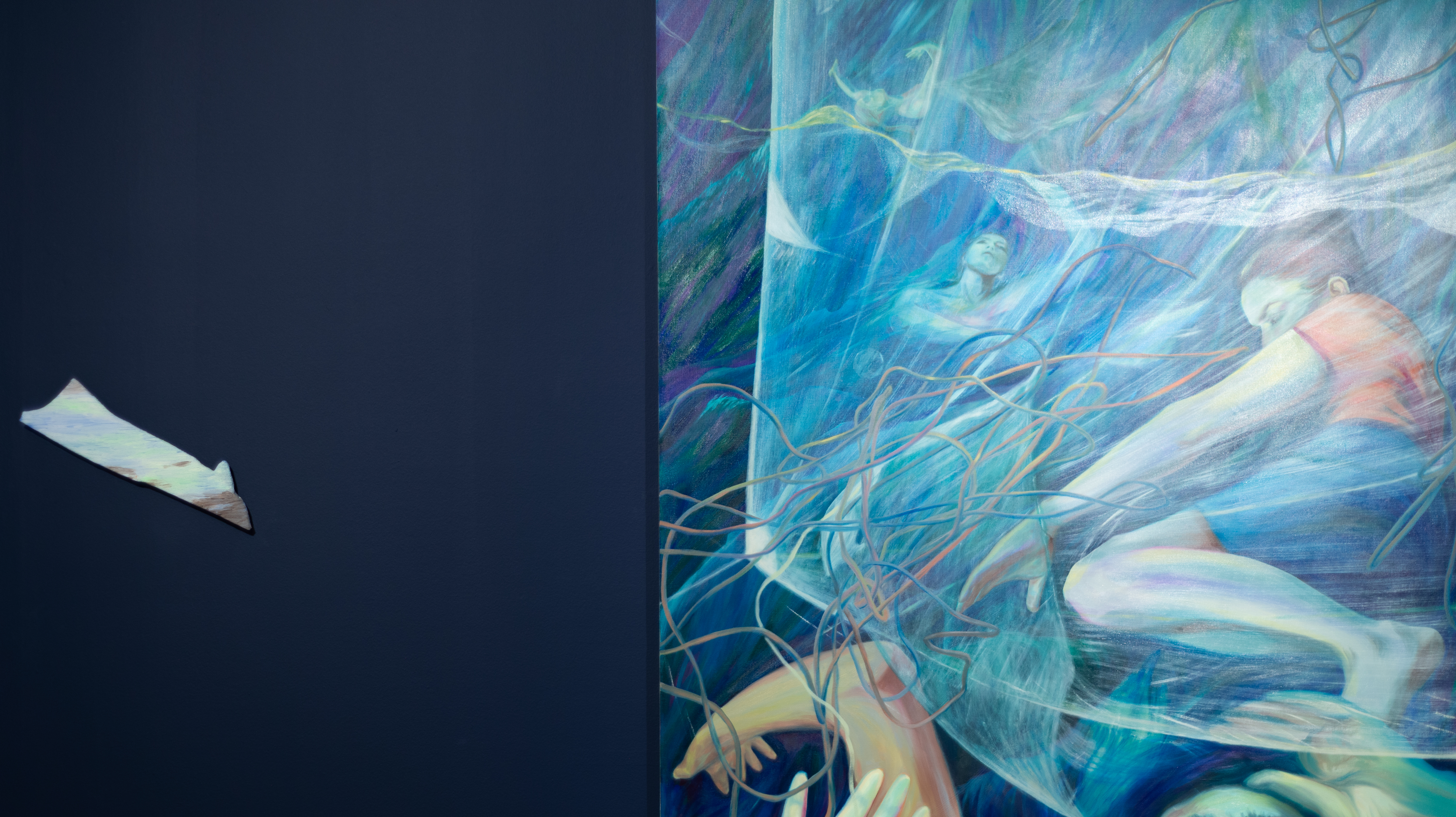
For the exhibition, Gaiger has produced a large number of works that juxtapose painting and installation in a cascading network of references. The paintings undulate through the space, taking us beneath the surface, unfolding over walls and floating across the floor. The works weave together personal stories, social commentary and literary and art historical references. She works in a figurative idiom with an expressive but subdued color scheme – often blue tones, white and touches of orange or magenta. Through play with perspective, draping and metaphor, she creates dynamic compositions where human stories of place and belonging are intertwined.

The exhibition’s title, As Emperors Own Empires, is taken from historian C.L.R. James’ reading of Herman Melville’s Moby-Dick, in which he describes how man (Captain Ahab) seeks to own the sea as emperors own their empires. For James, this becomes an allegory of modern power structures and the struggle between individual obsession (capitalist and imperialist control) and collective freedom. Gaiger borrows the title to turn our gaze towards our contemporary relationship with the sea: from colonial and industrial power projects to local and human stories of resistance and care. In this way, the title points towards both history and the present, as a question of who actually owns, or belongs to, the sea.

As an introduction to the exhibition project, Gaiger has collaborated with environmental activists from different parts of the world; Argentina, Canada, the Philippines, Shetland and Svalbard. Their descriptions of the landscapes they fight for, and their resistance to companies like Equinor, are a central source of inspiration and give the exhibition a multivocal, global perspective.

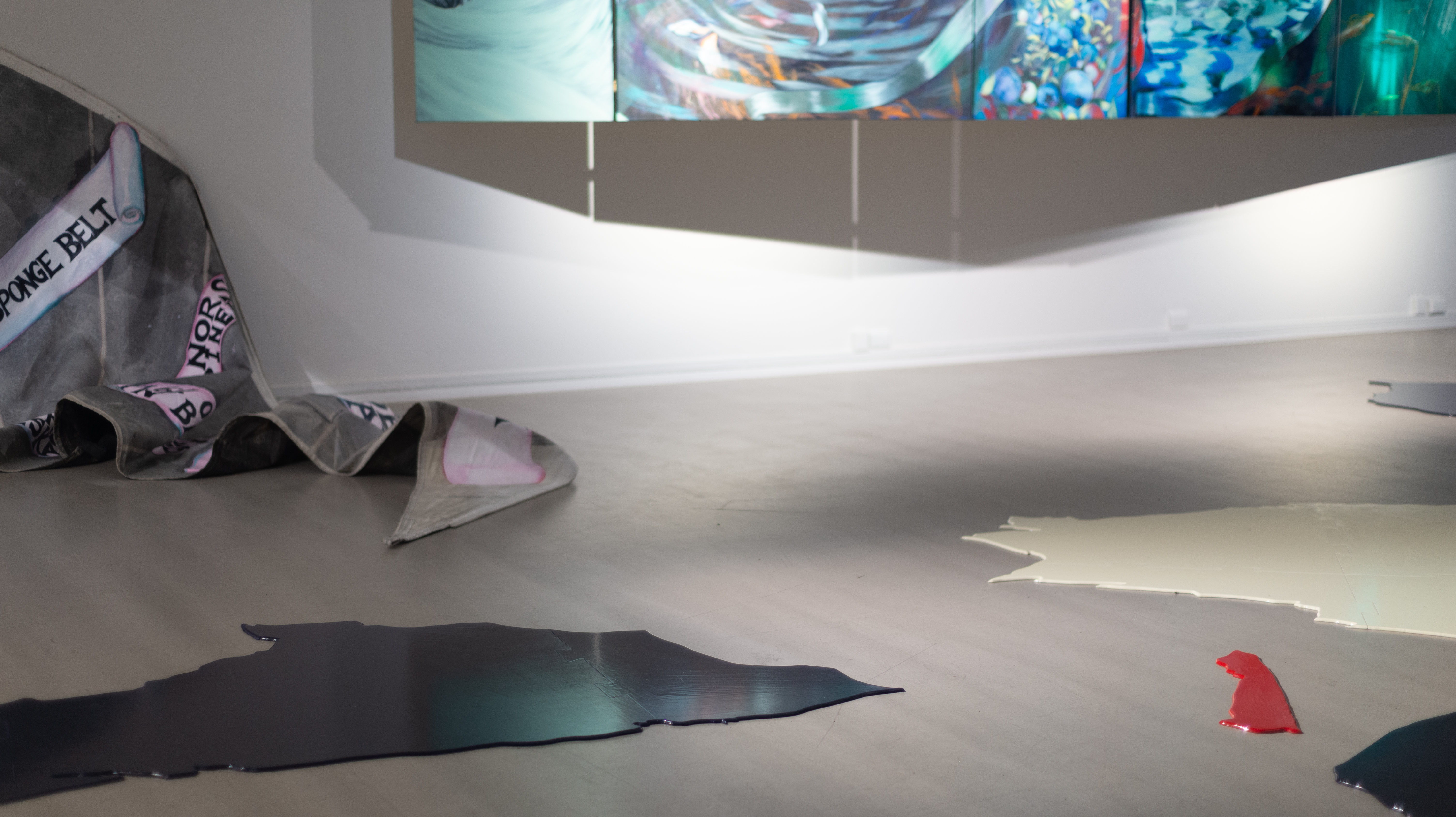
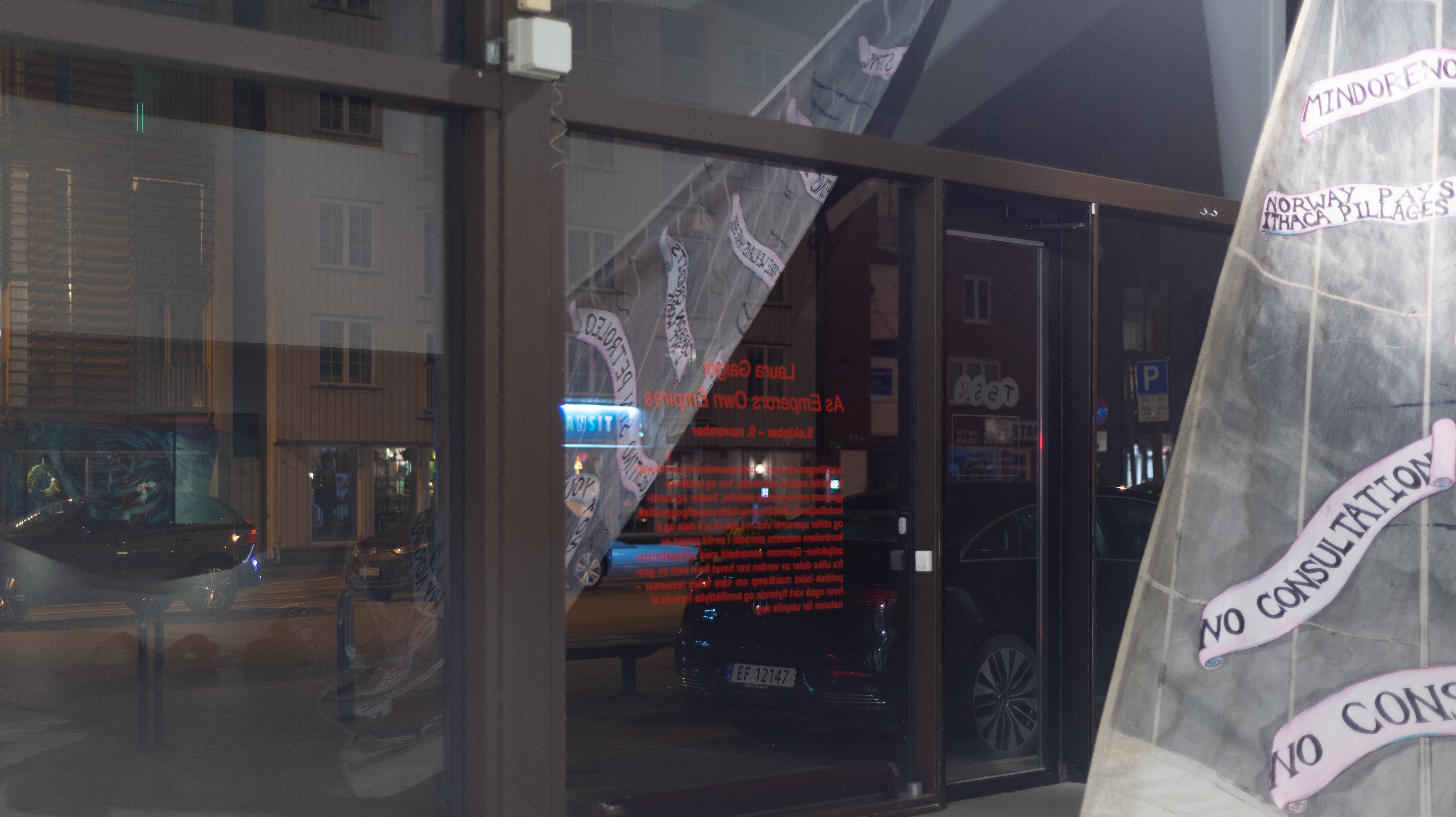
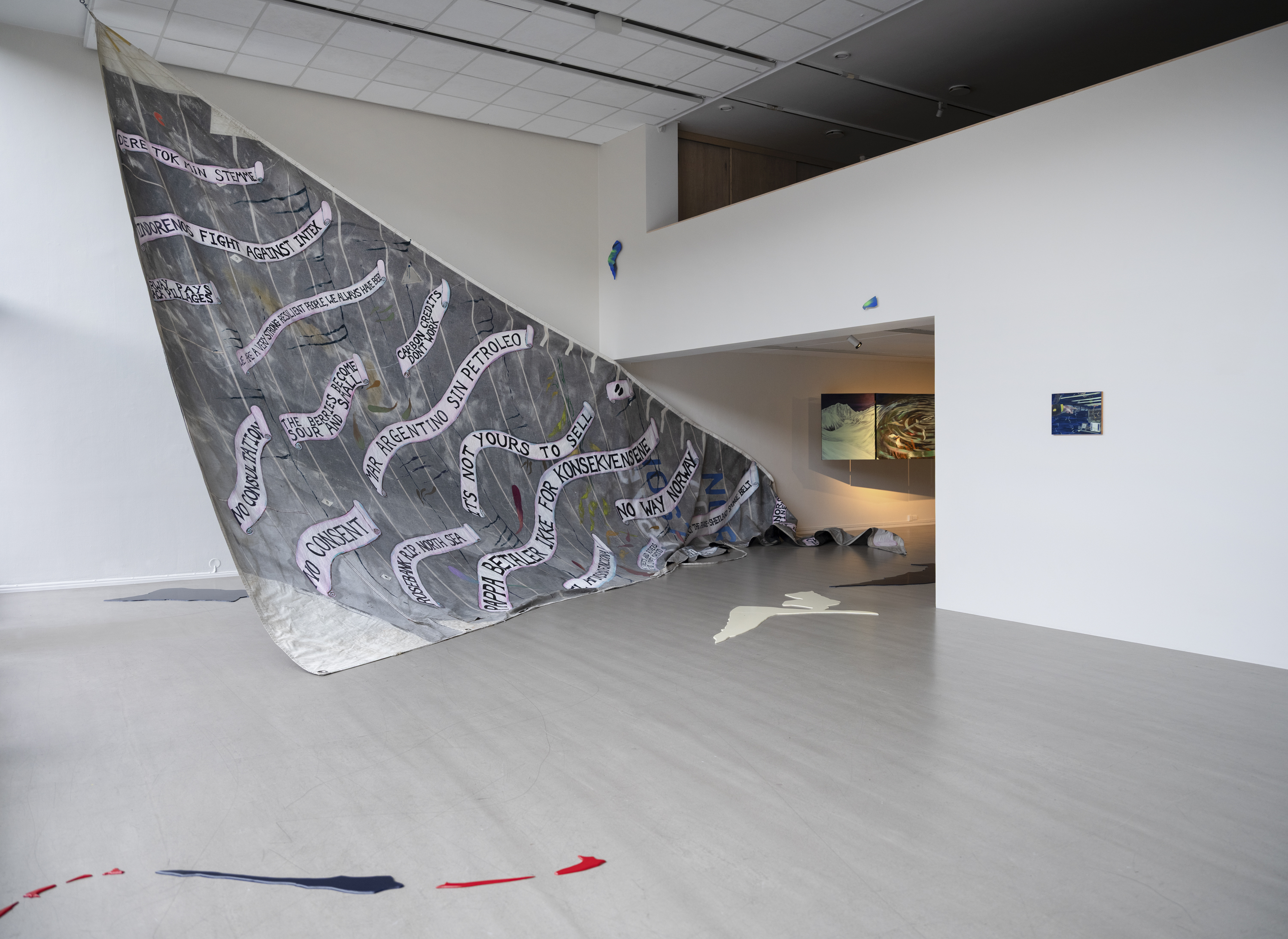
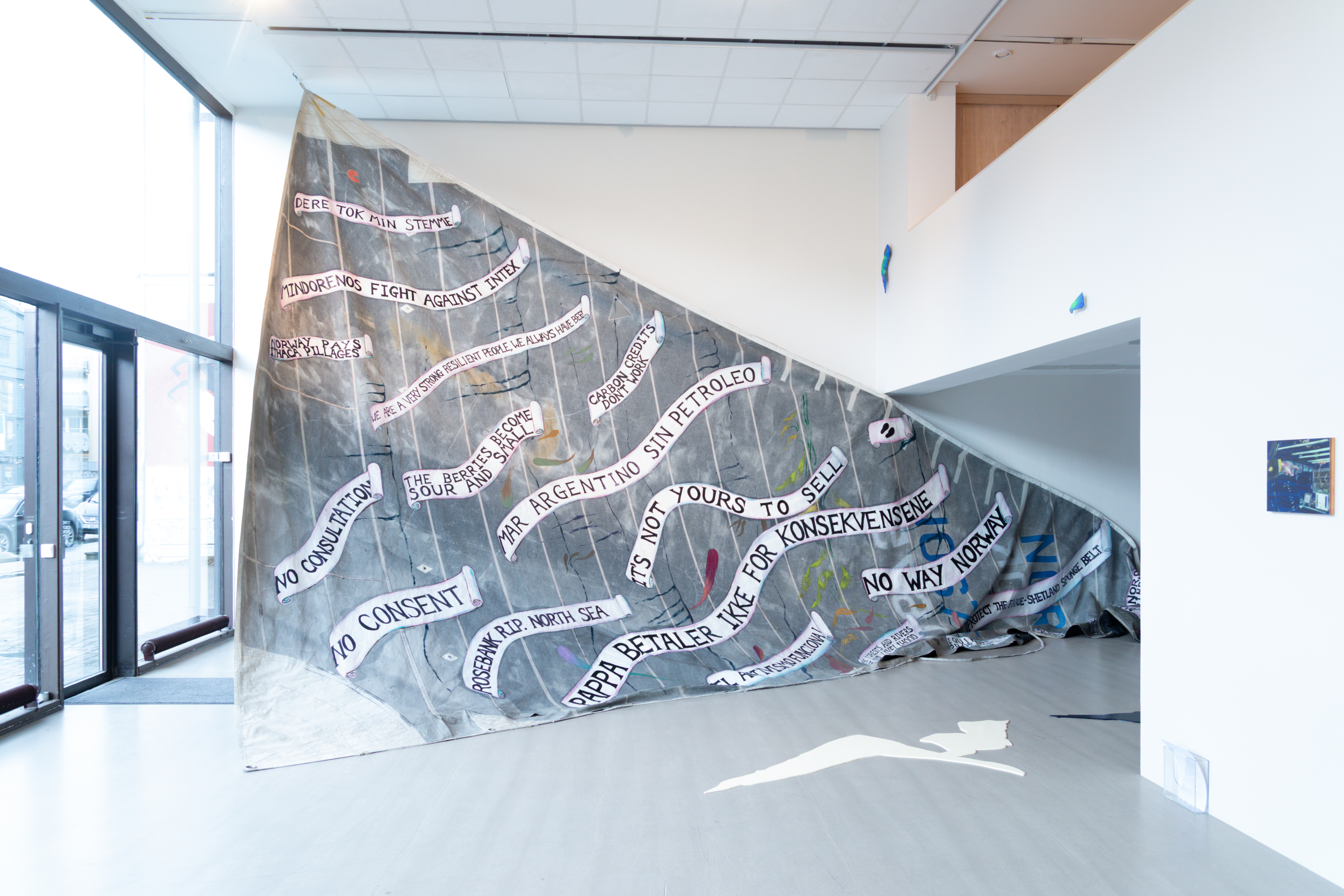
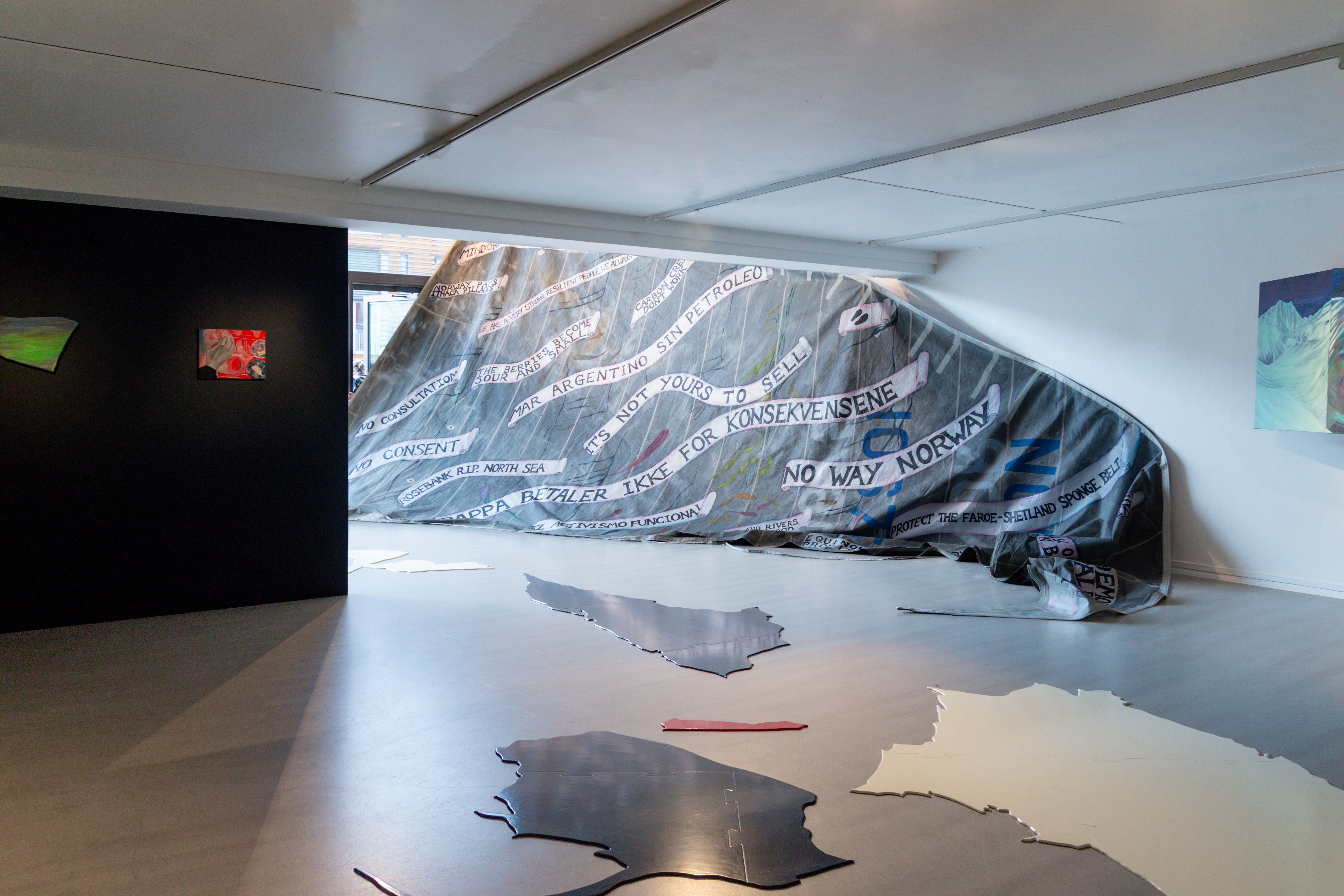
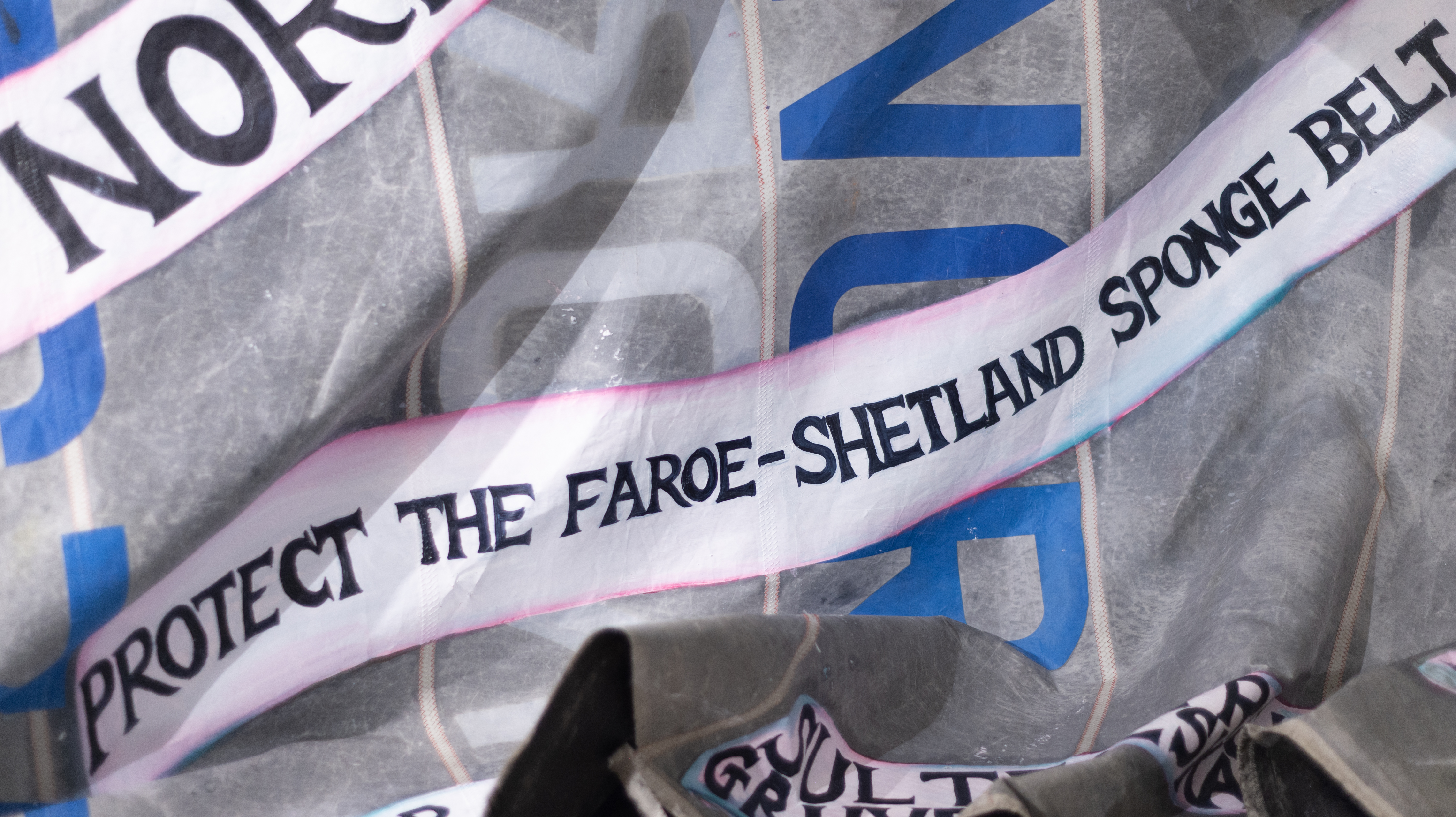
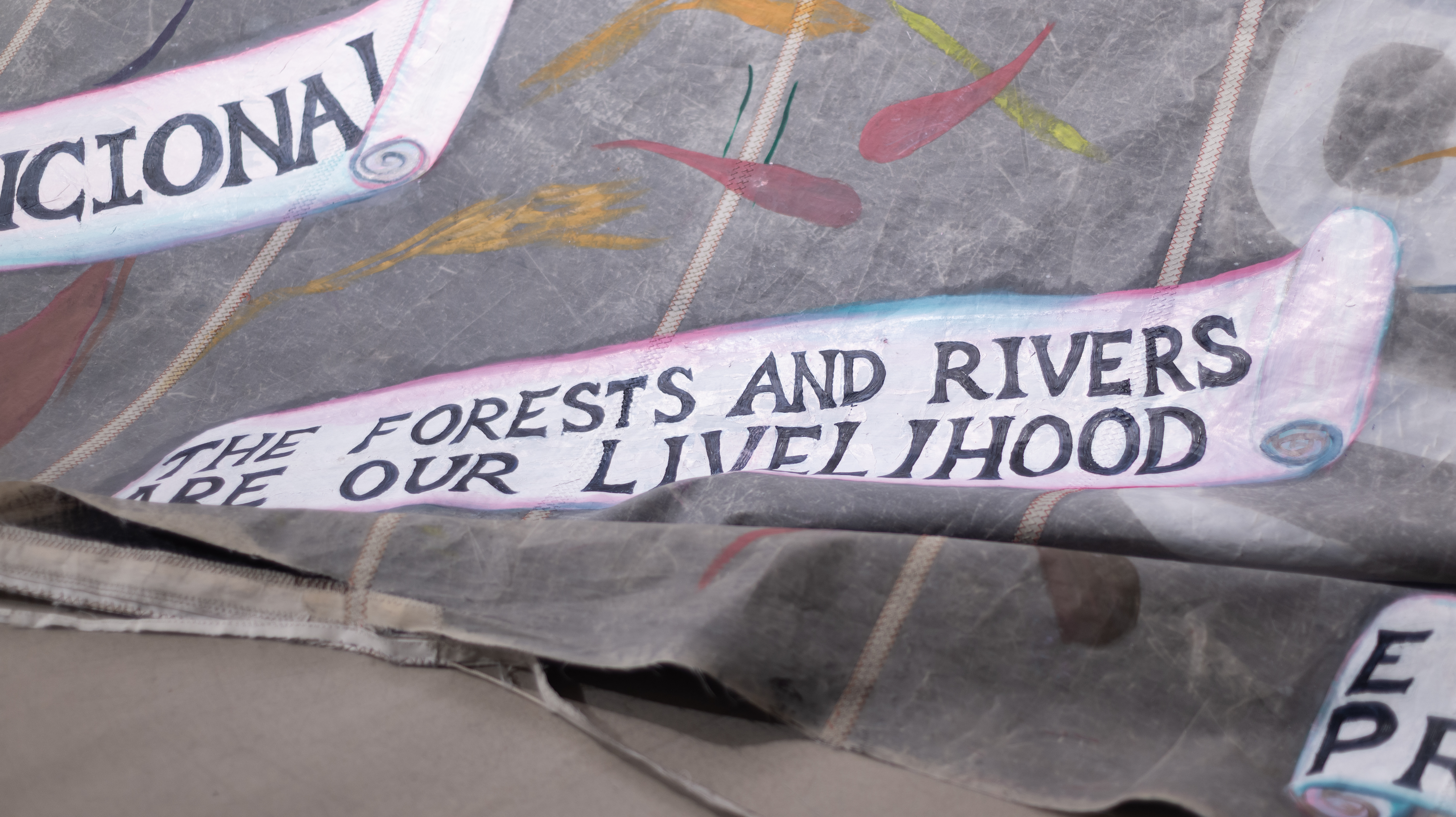
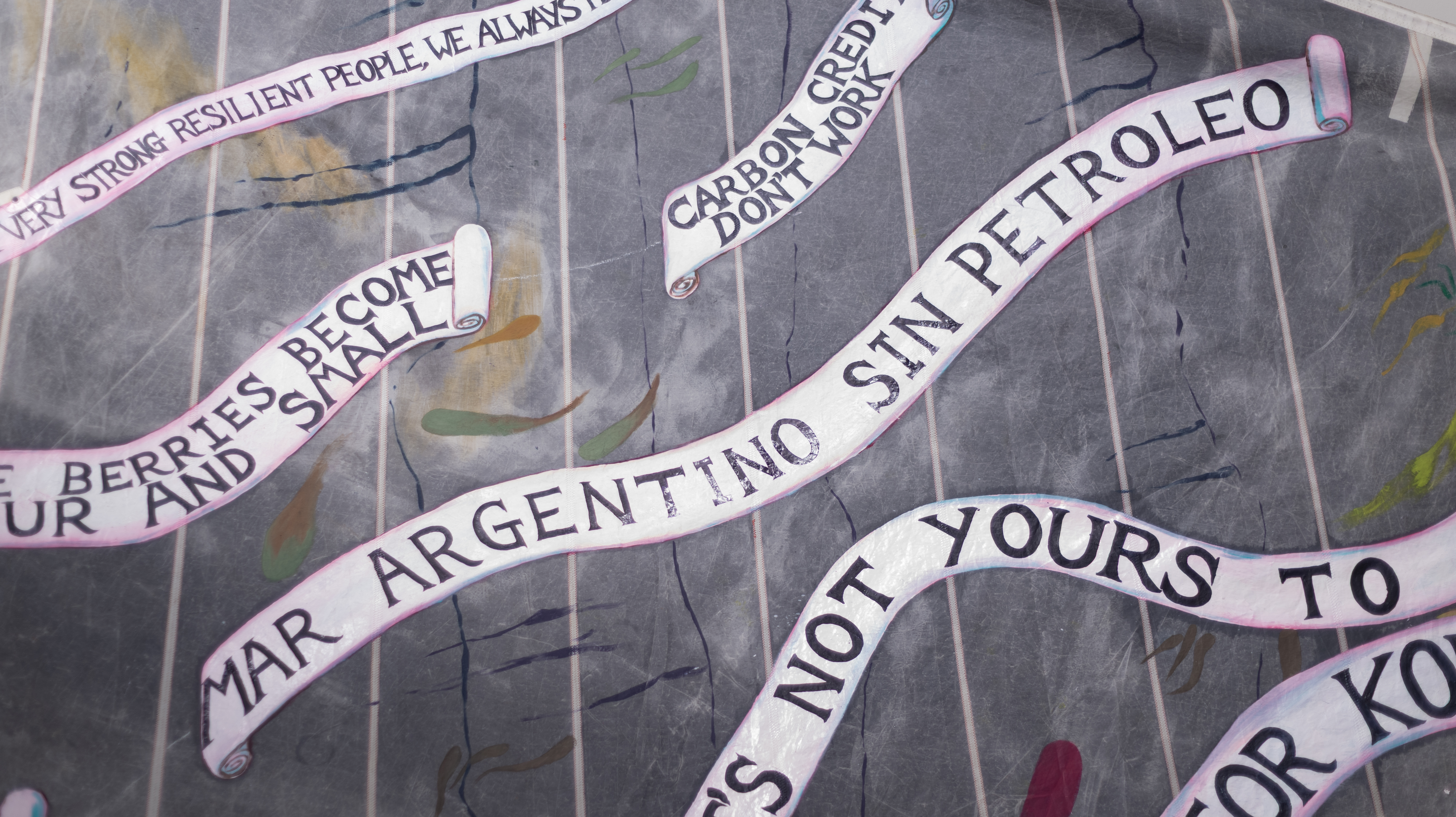
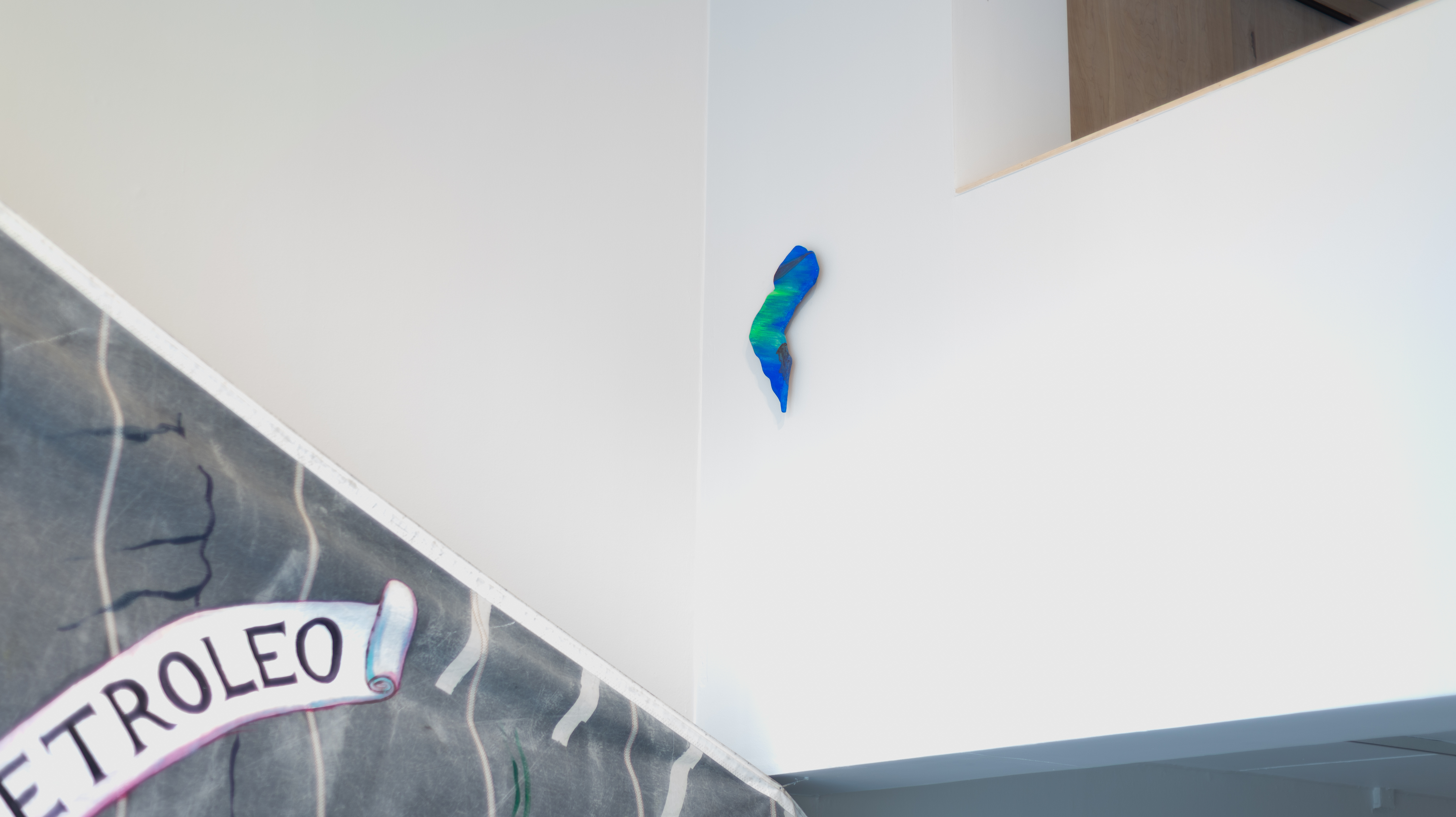
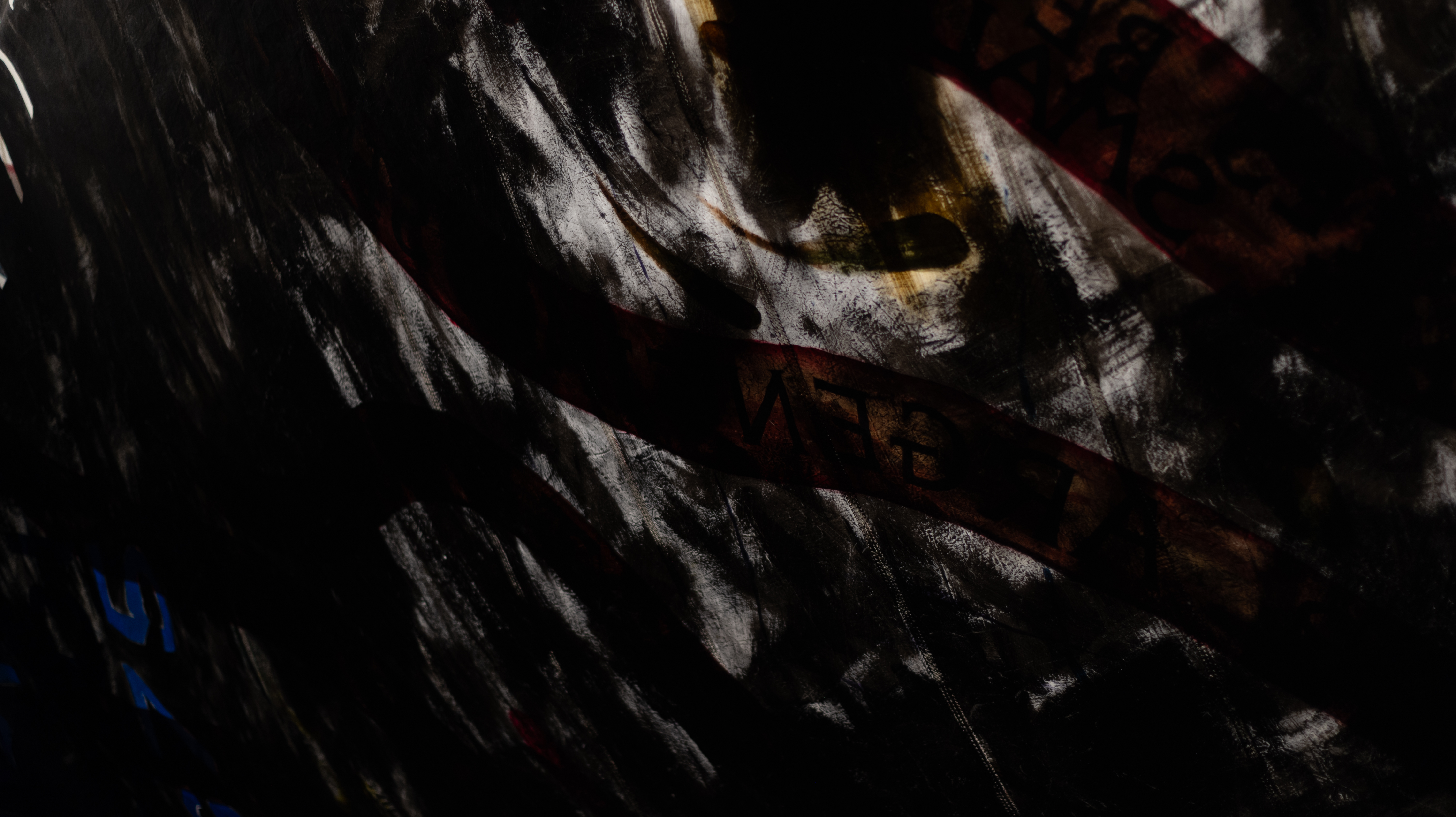
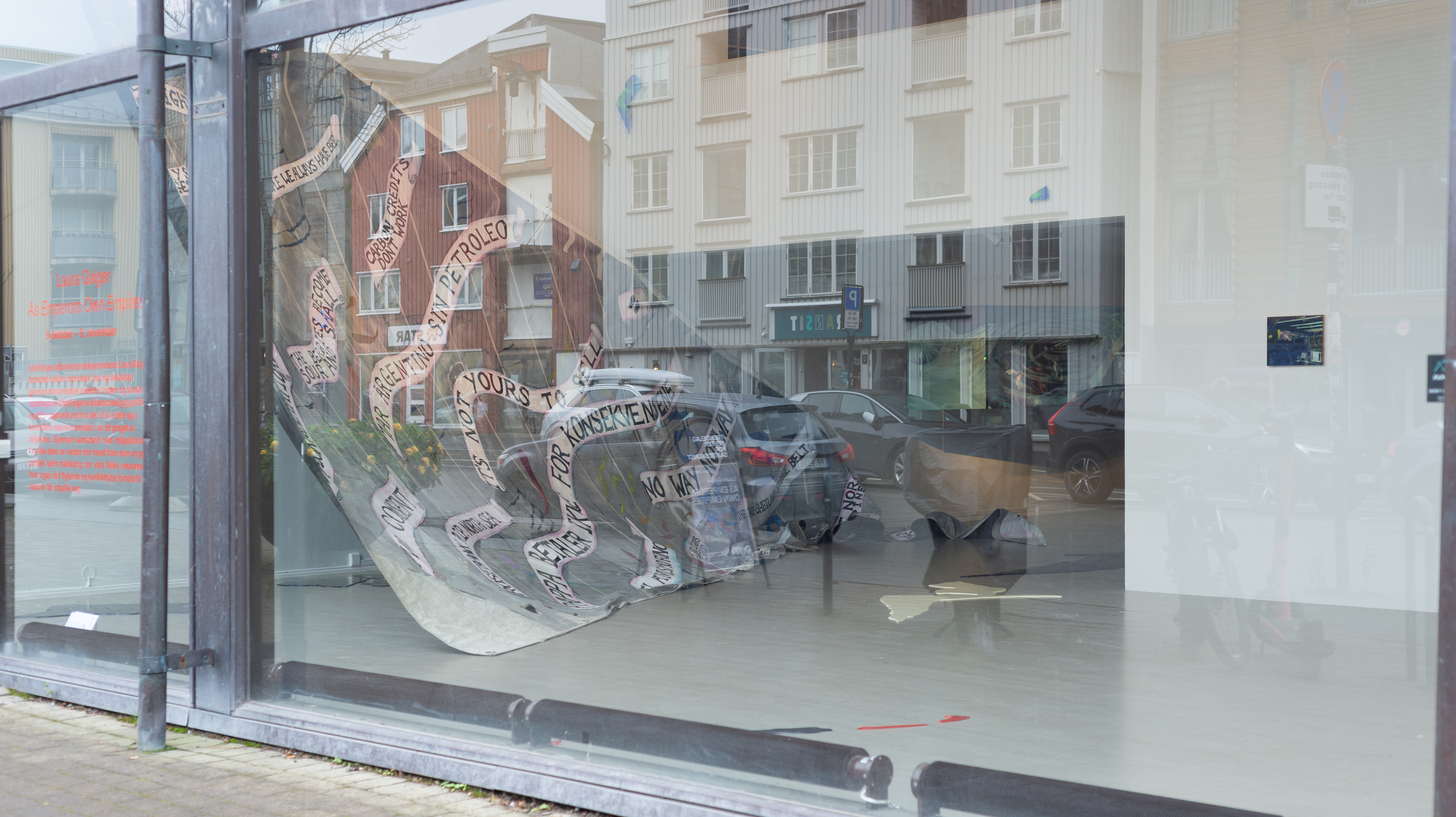
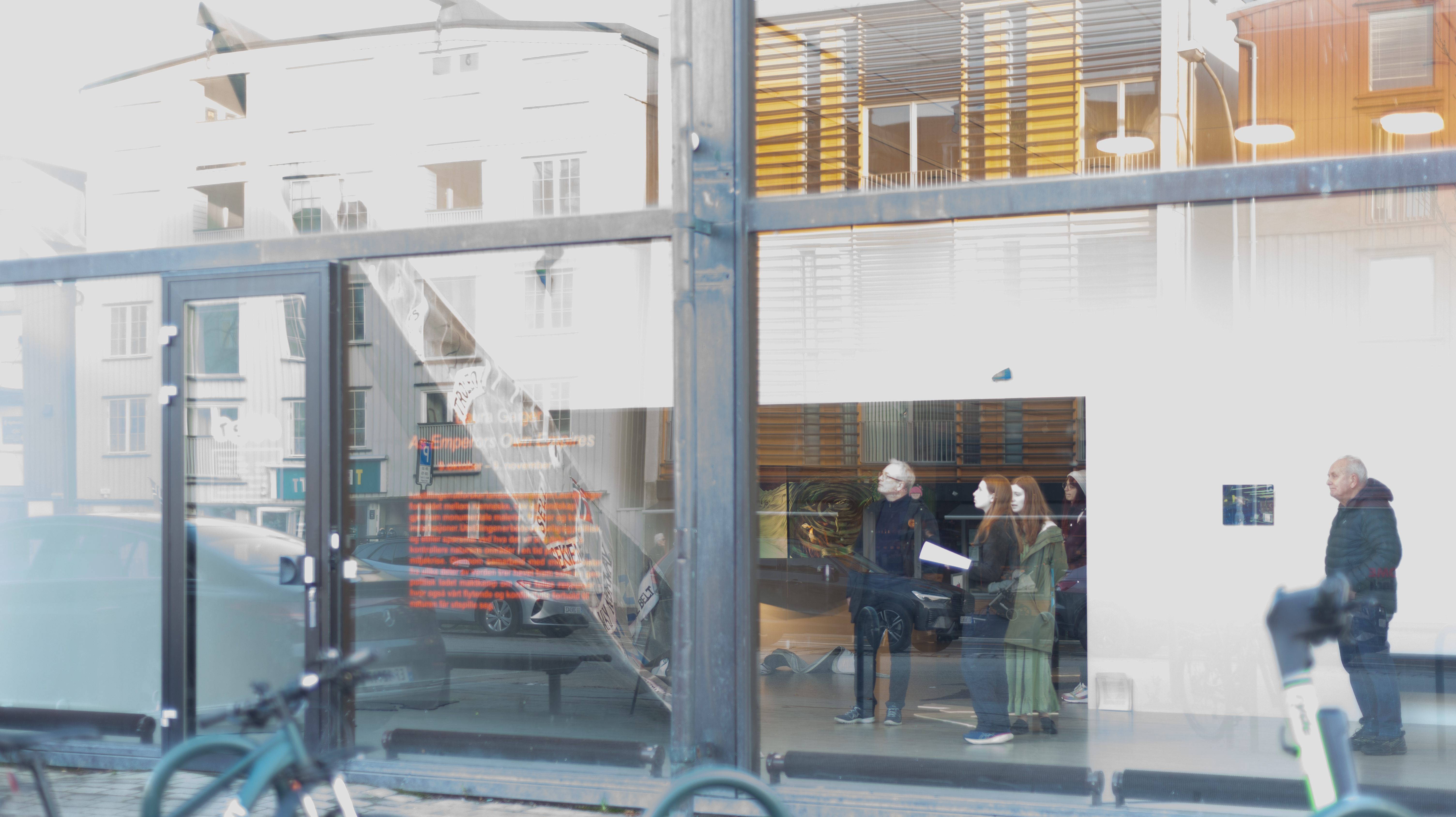
In the work ‘Pappa Betaler Ikke For Konsekvensene’, a 13-meter-long, weather-beaten sail forms almost a barrier in front of the entrance door. The dark sailcloth has been painted with many white text banners, with slogans from various protest movements' resistance to a growing Norwegian environmental colonialism in different parts of the world. The slogans refer, among other things, to Equinor's planned oil field off Shetland, Rosebank, where the company will receive UK state tax breaks for a project that threatens the ocean's ecosystems and which is estimated to release over 200 million tons of CO₂ if the resources are extracted. Equinor is also planning seismic surveys in the Argentine sea, where powerful sound waves are used to find new oil and gas fields. This is a method that threatens a unique marine ecosystem and has met with strong opposition from coastal communities, environmental lawyers and climate activists. Through the physical and symbolic weight of the work, Gaiger casts a critical eye on Norwegian industrial extraction in international waters, confronting us with the discomfort of slogans such as “No way, Norway”.

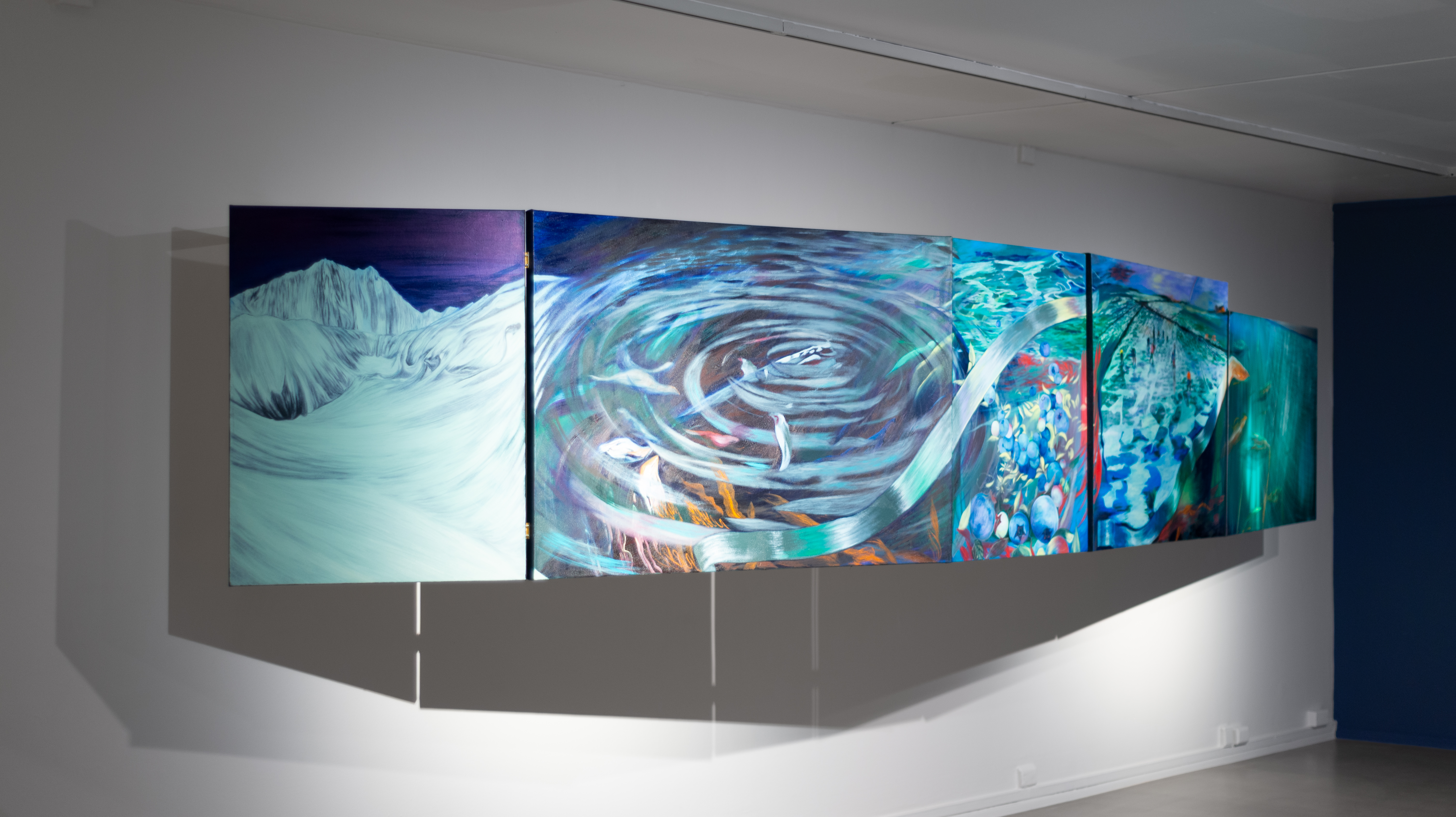
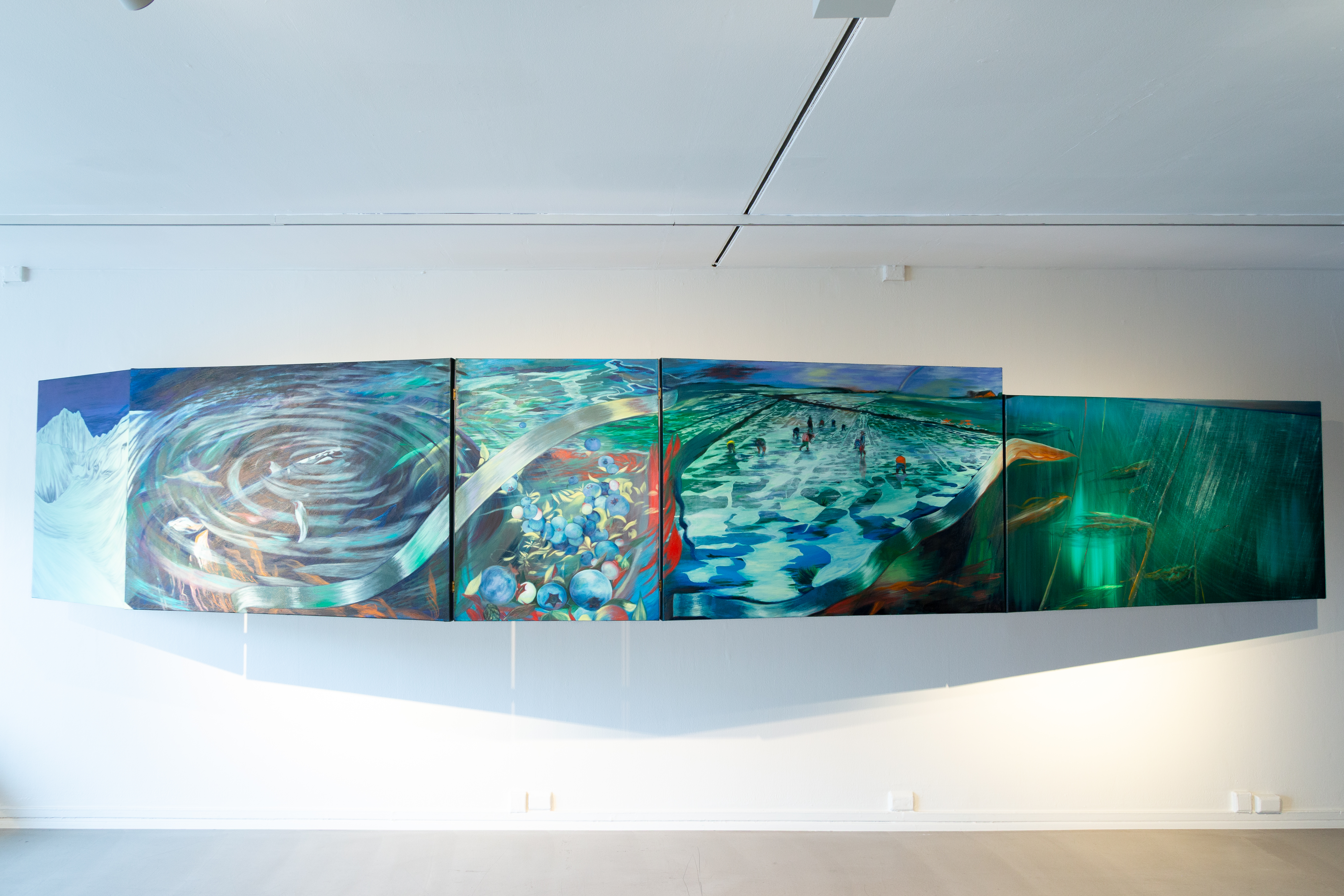
In a sculptural wall-hung panorama consisting of five paintings, the home landscapes of the environmental activists involved are portrayed. The panorama brings together five environmental struggles that illuminate how Norwegian companies, especially Equinor, are involved in oil and mining projects that threaten the climate, ecosystems and local communities – from Shetland and Canada to Argentina and the Philippines. At the same time, the situation in Svalbard shows how Norway’s geopolitical ambitions also affect people and the environment closer to home, where state control and national interests come at the expense of community, nature and diversity.

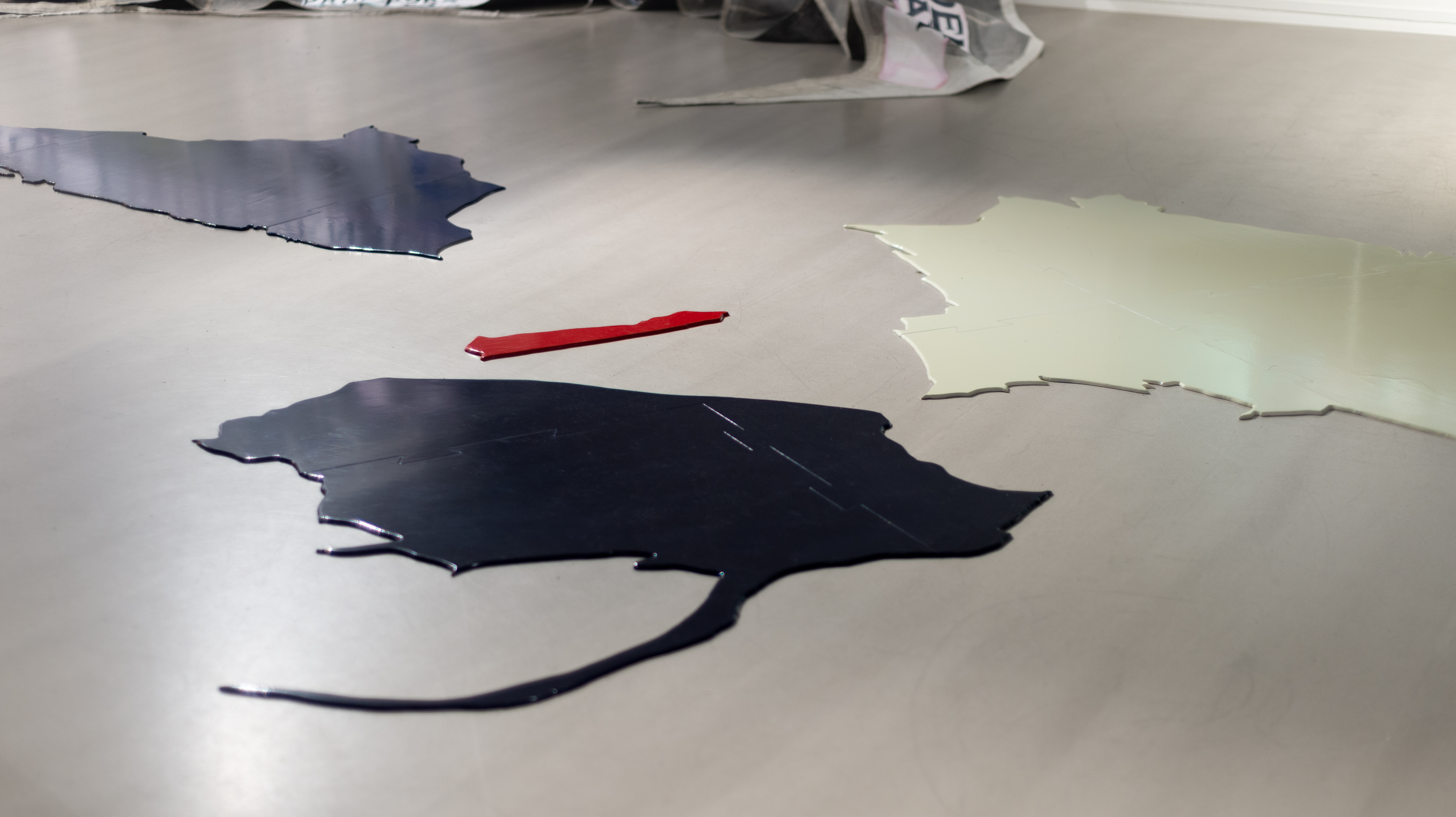
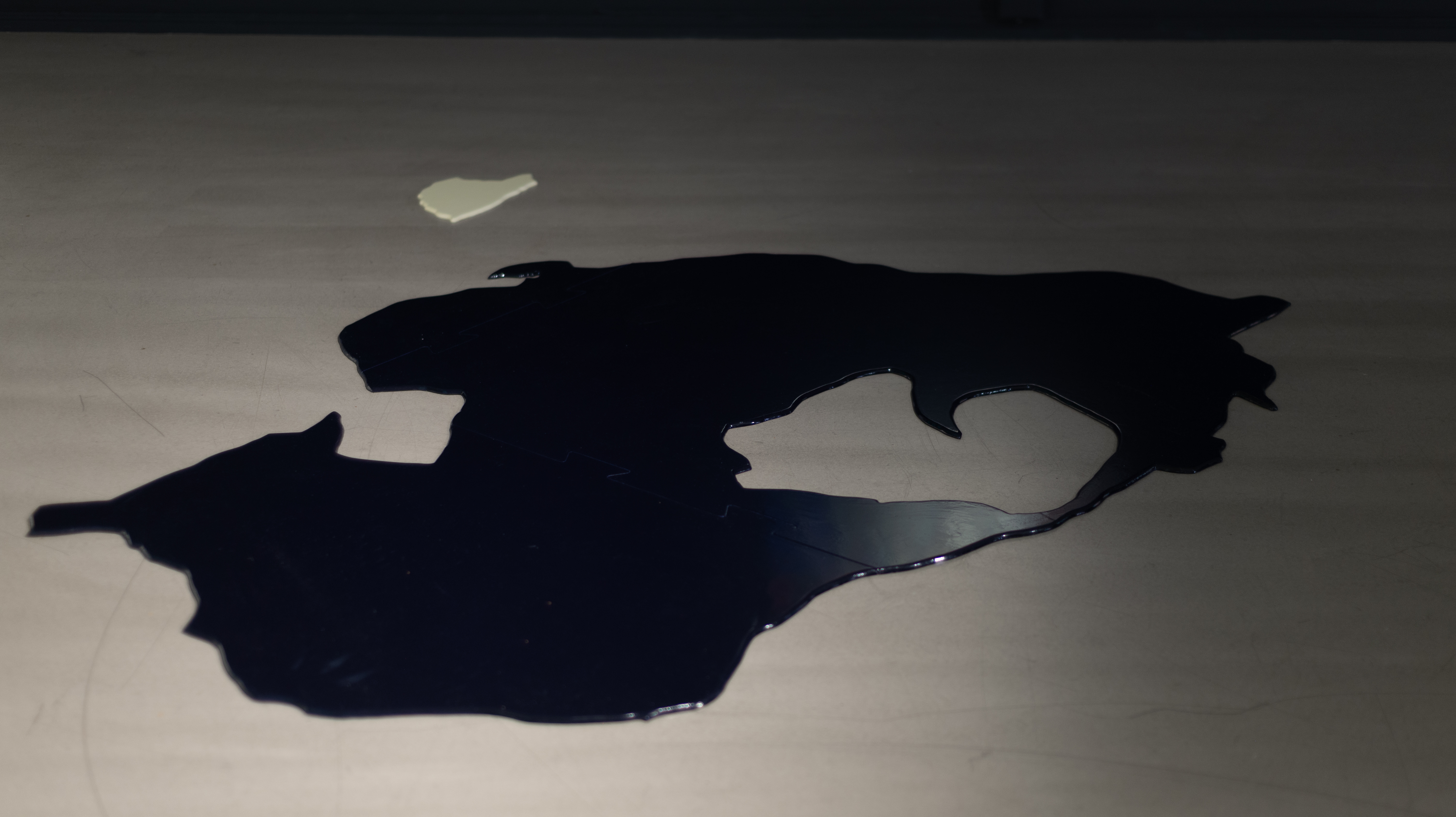
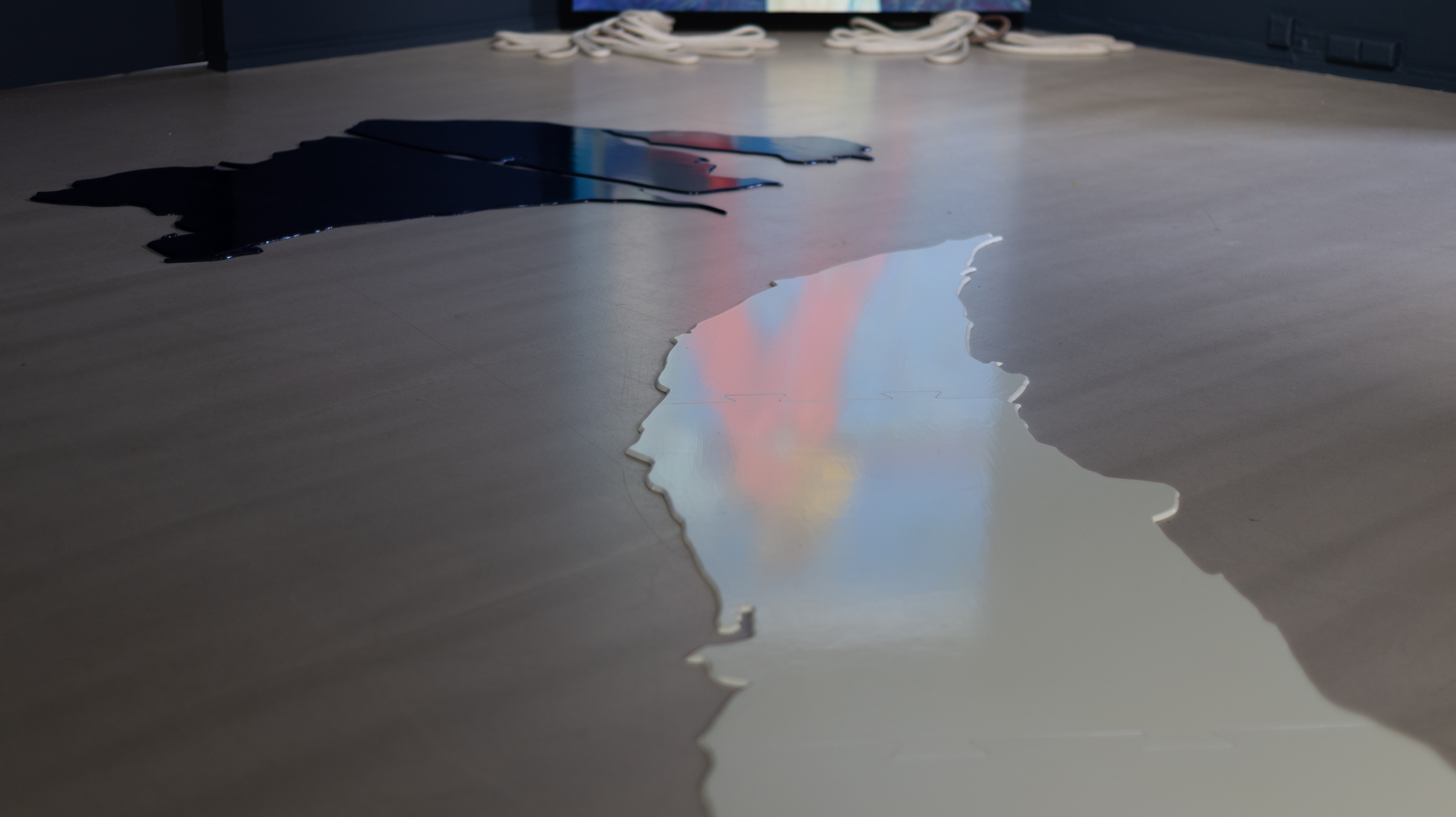
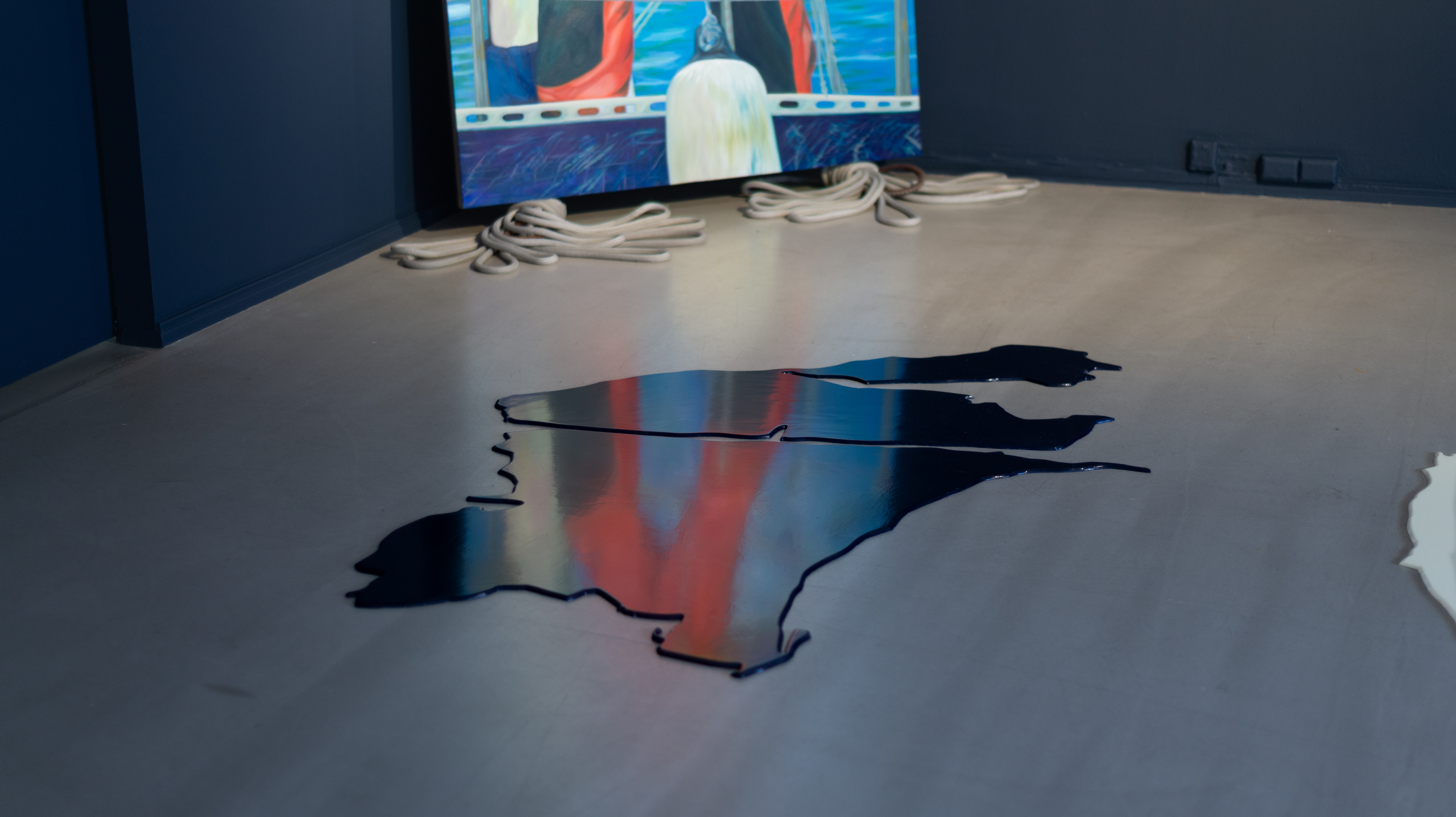
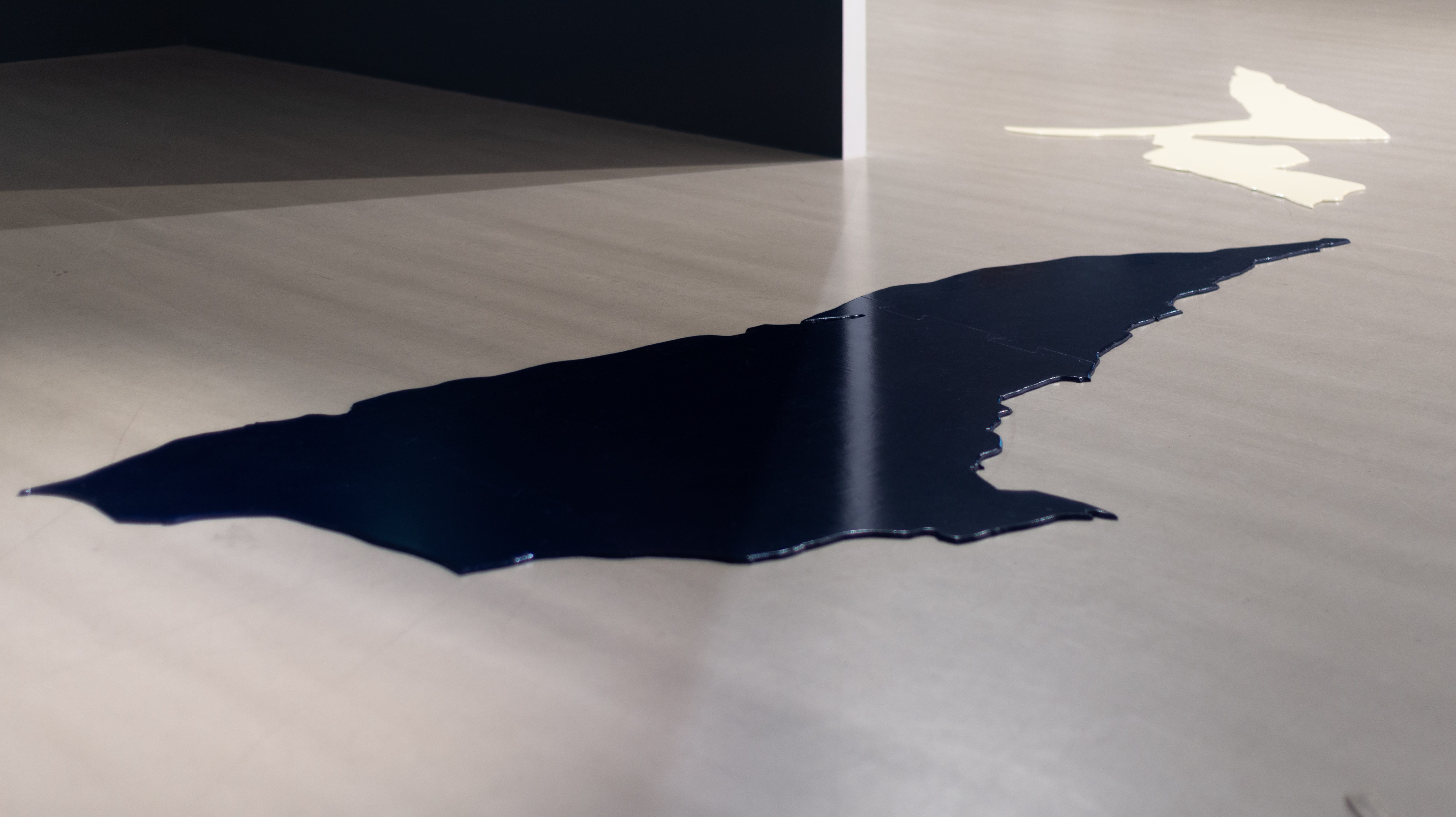
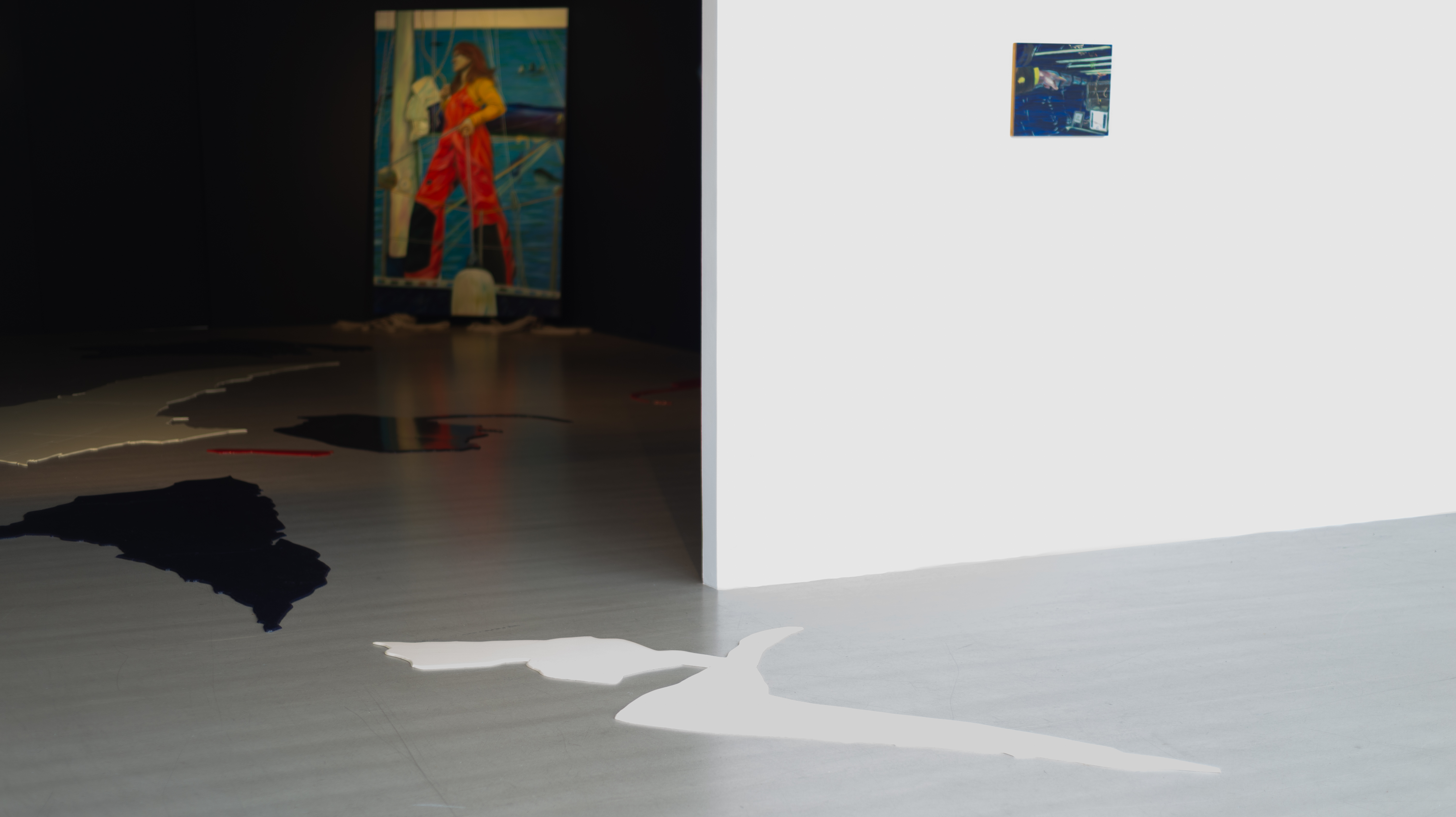
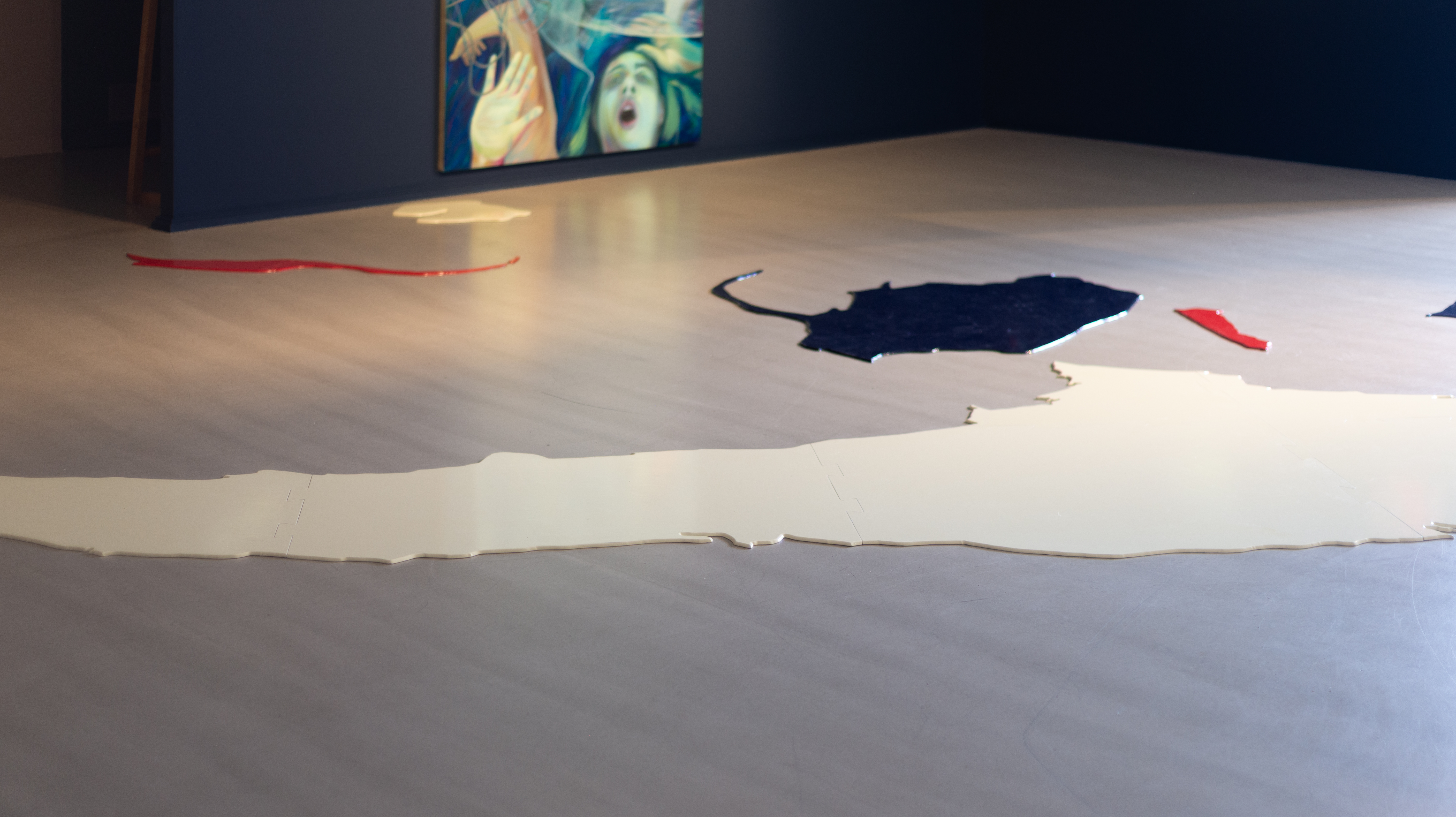
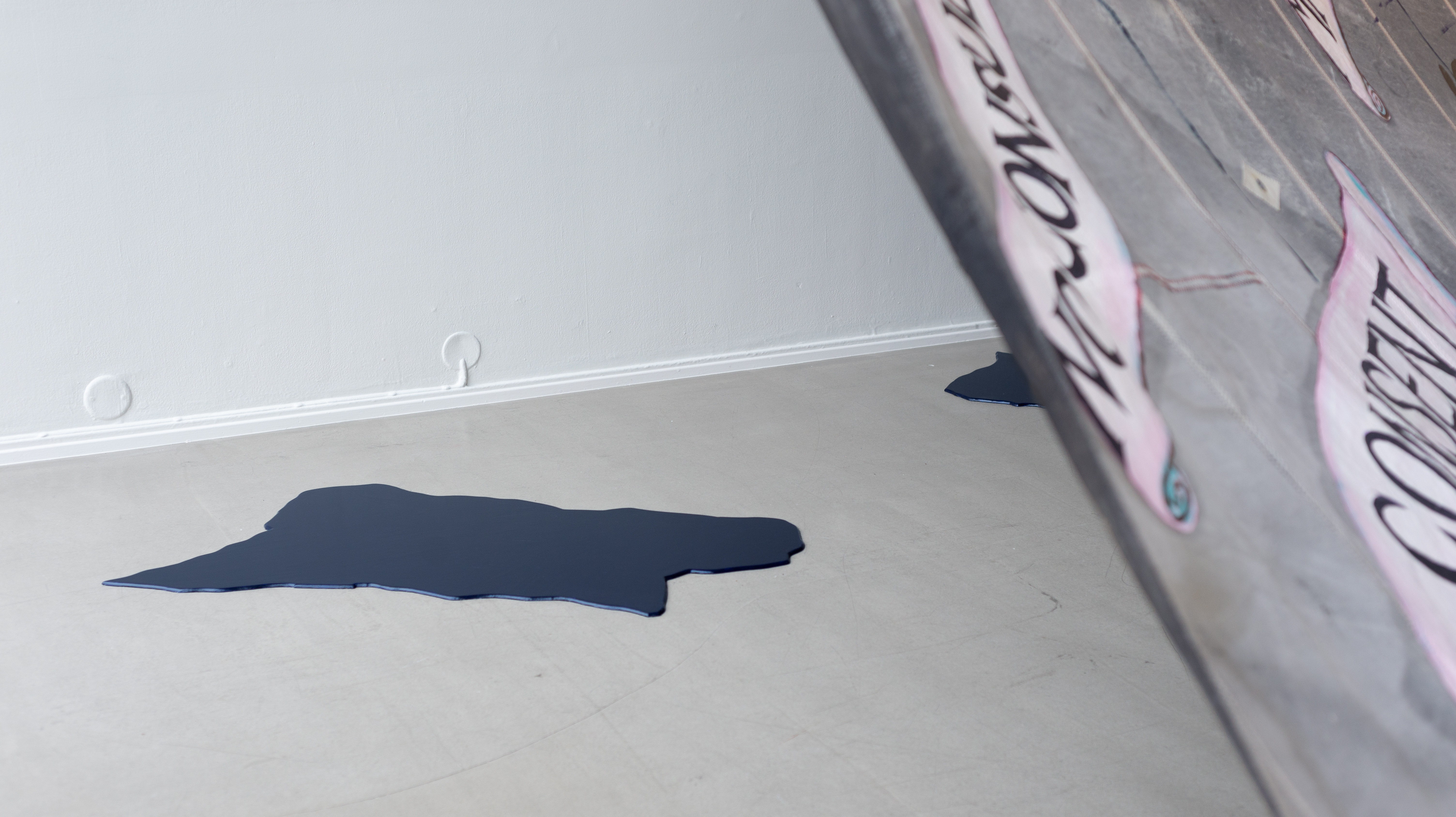
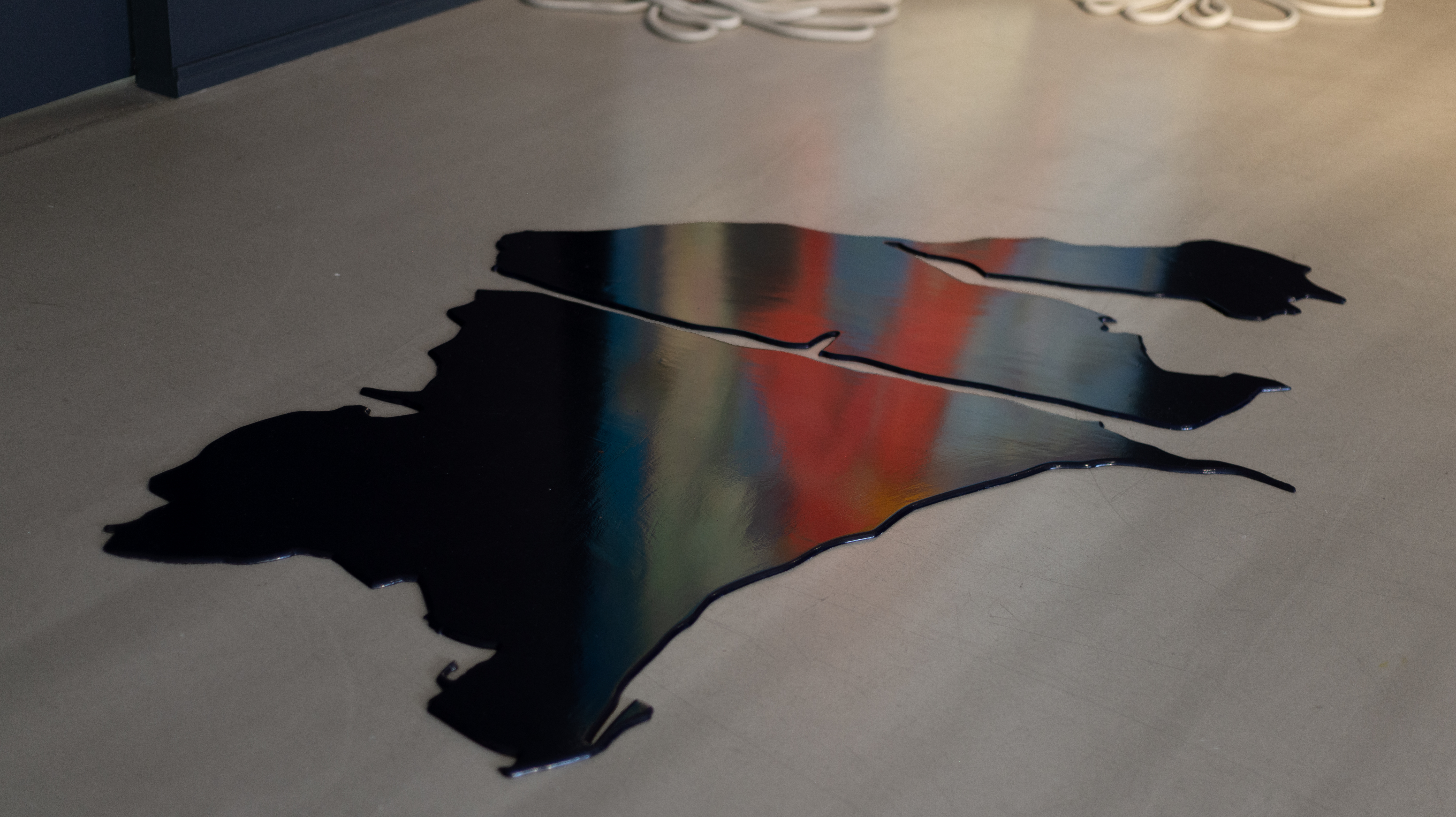
References to Equinor are repeated in the unifying shapes on the floor, which are derived from oil survey maps and seabed topography. The CNC-cut shapes are painted with boat laquer and varnished so that it is possible to walk on them. The two large paintings ‘Self Portrait as Rebecca’ and ‘Boiled in Hell-Fire’ explore the contradiction between freedom and perdition at sea, between the fearless sailor and the one who is thrown overboard. The two works mirror each other as ideal and alter ego, where the sea is both a space for self-realization and a reminder of the untamed forces of nature.

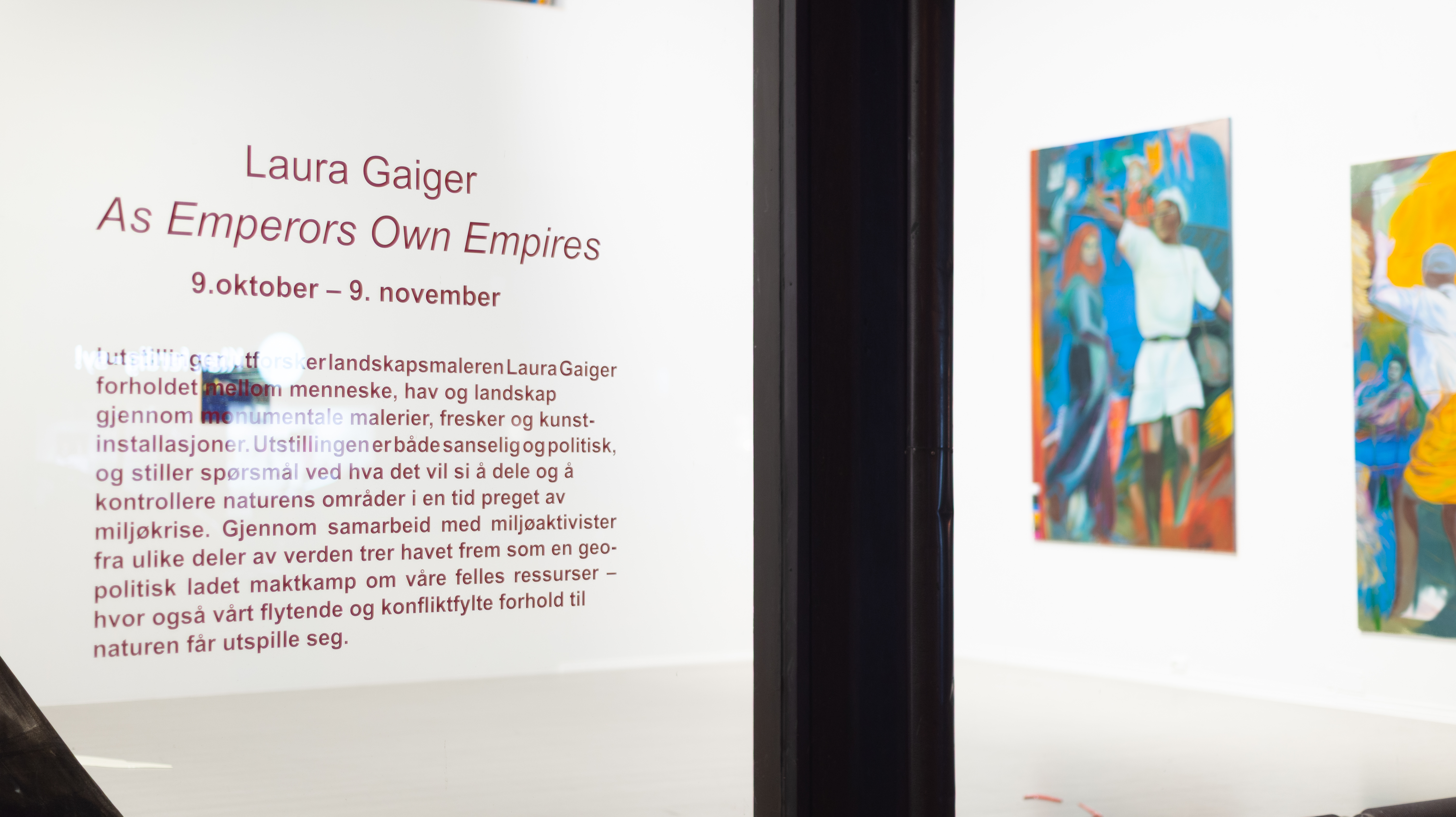
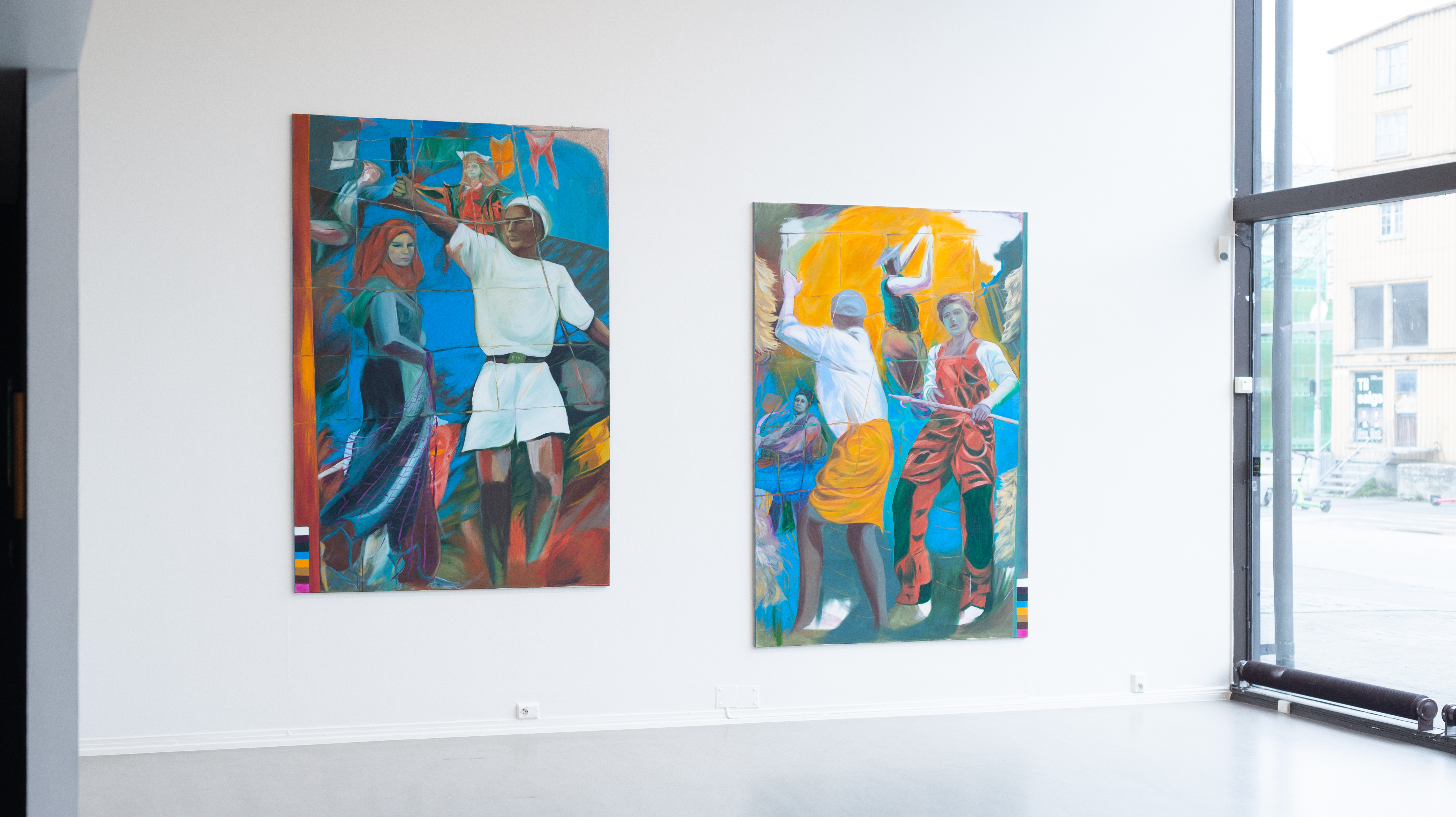
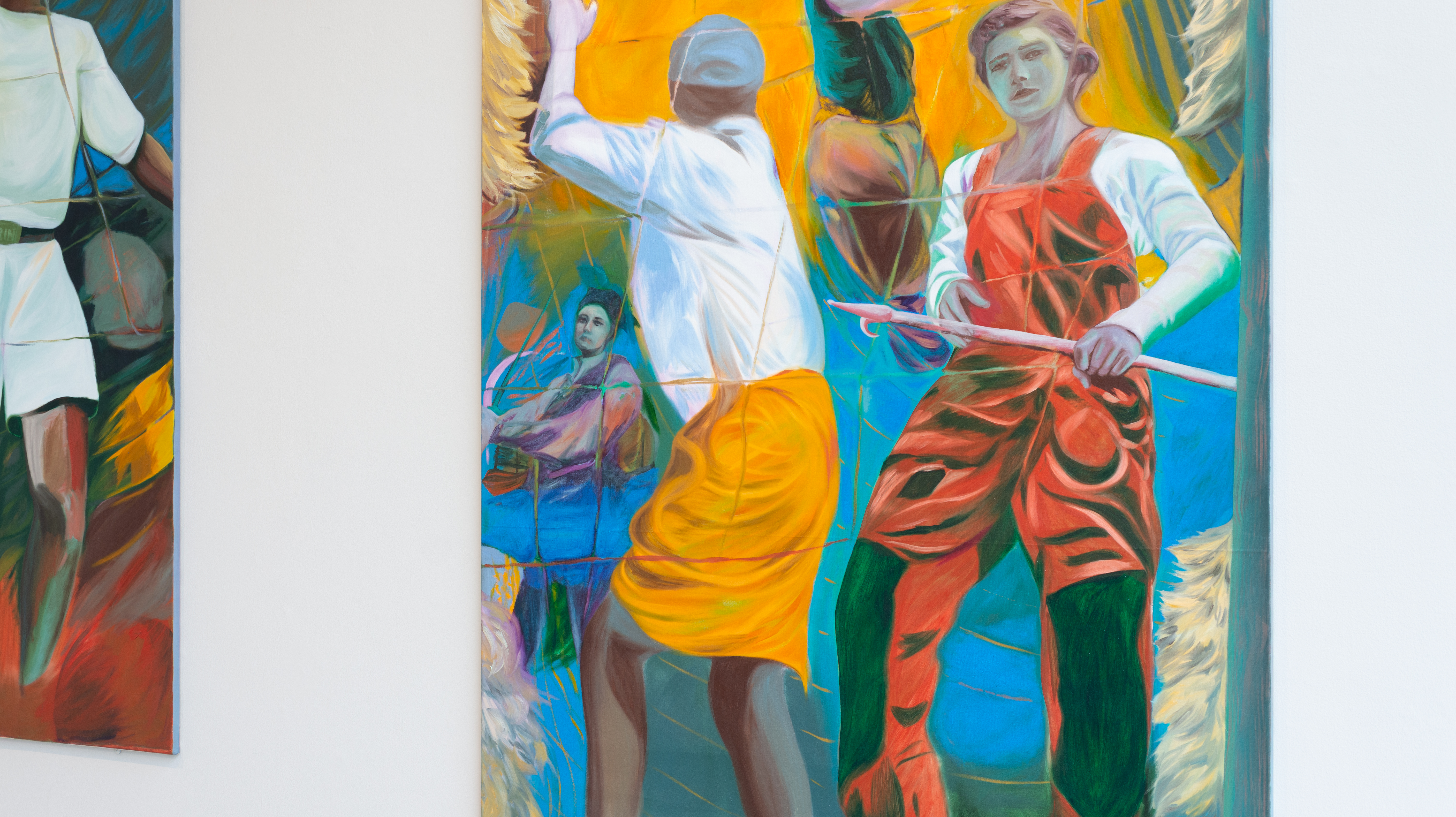
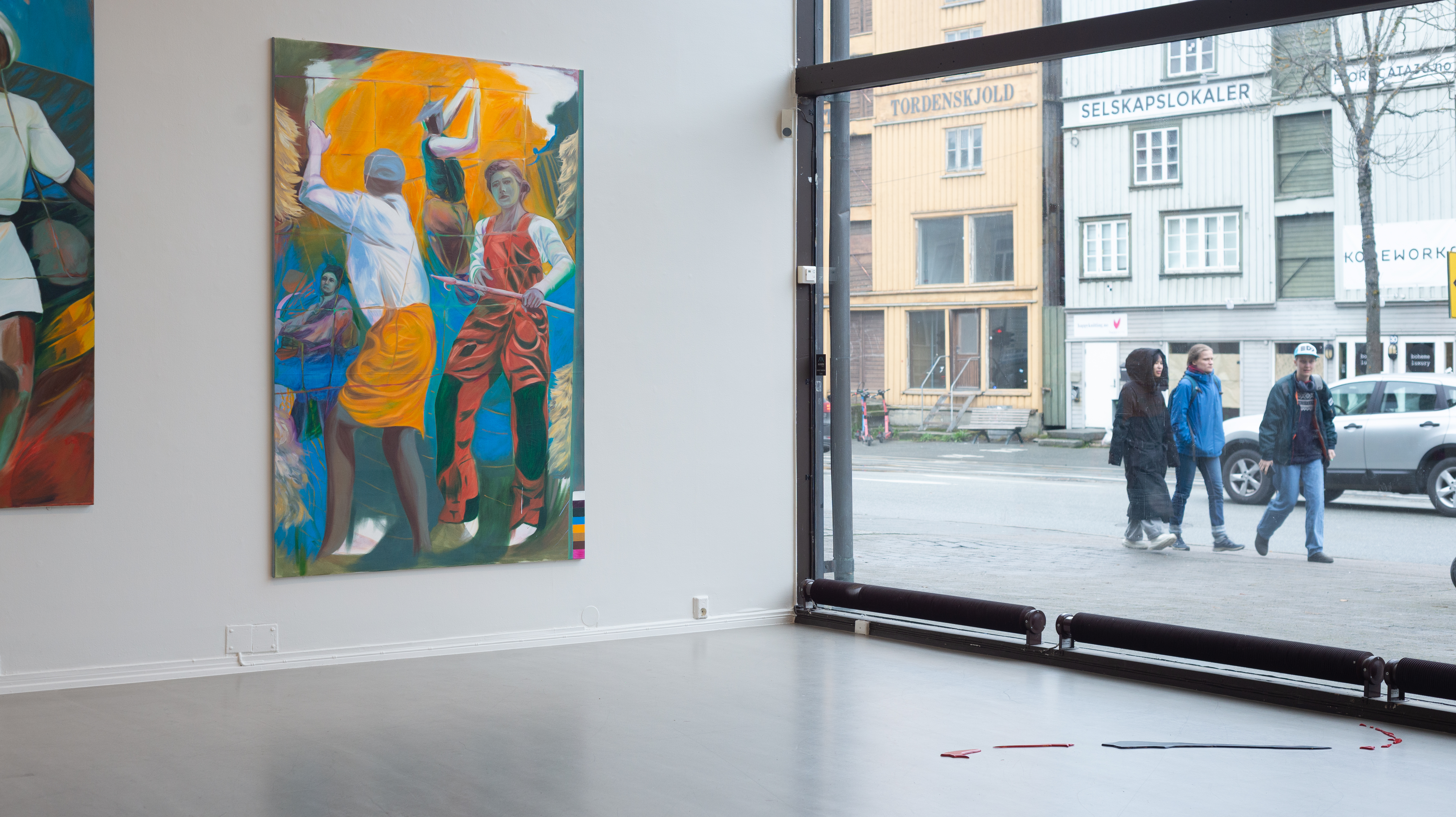
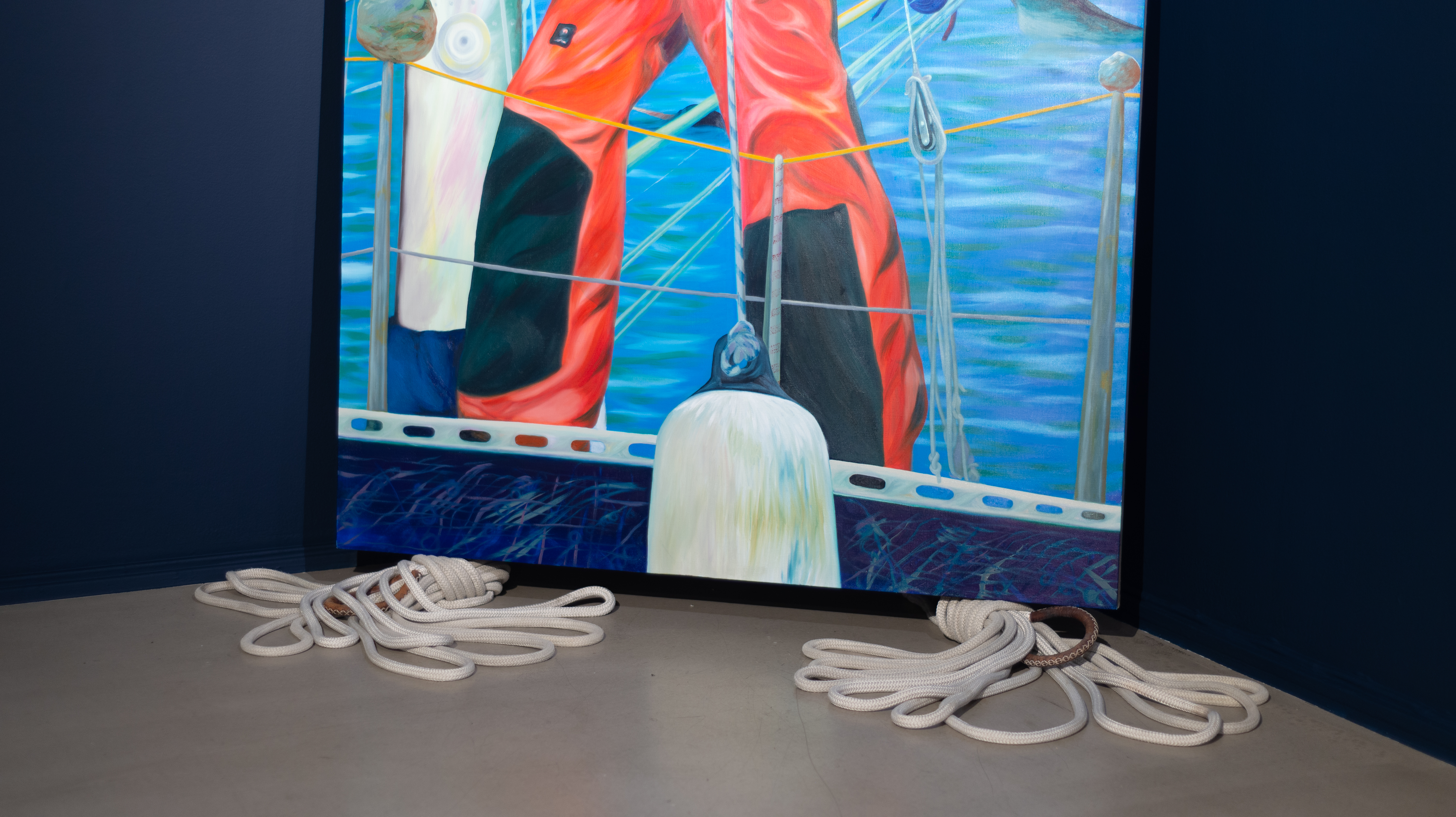
In the two large paintings ‘The Blue Commons’, a community of figures emerges. People who have defied oppressive structures and found their freedom at sea. The figures are highlighted both through the perspective of the composition and their high position on the wall. Their gestures and movements create a dynamic, vivid expression in clear tones of white, sky blue and bright orange.

The figures can be identified as the Chinese pirate Zheng Yi Sao, a woman who in the 19th century demanded power in a male-dominated world and led over 400 ships and 60,000 pirates. The British author Daphne du Maurier is portrayed in red overalls and is celebrated here for her free but threateningly independent literary character Rebecca. We also find Madleen Kulab, who is Gaza's first female fisherman, and who fights for the right to feed herself and her family from the sea and to preserve the sustainable traditions of her local community. There is also a sailor from the Royal Indian Navy mutiny in 1946, who represents collective courage and struggle against colonial oppression. The title refers to economist Guy Standing's idea of the ocean as a blue commons – a common good threatened by privatization and industrial extraction – and to political scientist Elinor Ostrom's research on how communities can manage natural resources themselves without hierarchical control. Through these images, Gaiger unites storytelling, theory and mythology into a visual manifesto of human resilience, freedom and care for the sea as a shared space.

Placed opposite the large sailcloth, the paintings form a space for shared resistance and solidarity, where the sea appears as a liberating landscape for human agency and survival. The exhibition thus conveys a multi-voiced story of resistance, responsibility and belonging, where the sea becomes an image of both exploitation and freedom, control and care in the face of crisis.


Margrete Abelsen
Exhibition producer


Laura Gaiger ‘As Emperors Own Empires’ is presented at Trøndelag Center for Contemporary Art from October 9 – November 9, 2025.
Gaiger has received support for the exhibition from the Arts Council of Norway, the Norwegian Artists' Remuneration Fund and the Municipality of Bergen.

Thanks to: Oda Tungodden, Mathias Tyvold (Studio assistants) Bergen Fellesverksted, Marilinn Lund (Technical support with CNC milling and terracotta)

Thanks also to the activists who have given their time to the project: Juliana Orihuela in Argentina, Andrea Sánchez in Shetland, Edwin Gariguez in the Philippines, Jude Benoit in Ktaqmkuk (Newfoundland), Sergei Chernikov in Longyearbyen.


__

Original text in Norwegian:

I As Emperors Own Empires utforsker den britiskfødte landskapsmaleren Laura Gaiger menneskets forhold til havet, som naturkraft, politisk landskap og felles ressurs. Gjennom en totalinstallasjon av monumentale malerier på seilduk og lerret, små fargesterke fresker og utskjerte gulvverk undersøker hun hvordan imperialistiske, økonomiske og nasjonale interesser griper inn i økologiske og sosiale sammenhenger. Her er også historier om hvordan enkeltmennesker og små lokalsamfunn motsetter seg former for kontroll. I denne rike visuelle, sanselige og politiske utstillingen rommer de referanserike arbeidene også en undersøkelse av menneskets trang til å kontrollere naturen og vår sårbarhet overfor de kreftene vi forsøker å temme.

Hvordan leser man et landskap? Laura Gaiger insisterer på at hun er landskapsmaler. Det henger sammen med at hun forstår landskapet som et rom der menneskers erfaringer, historier og handlinger utspiller seg. Landskapet er slik sett ikke bare natur, men et sosialt sted med en sosiopolitisk historie. Landskapsmaleriet har historisk fremstilt naturen som et idealisert og uforanderlig bilde på identitet, snarere enn som et levende og skiftende rom. For å bryte ned den romantiske forestillingen om naturen som noe adskilt fra oss, lar Gaiger menneskelige historier, konflikter og drømmer foldes inn i landskapet. Slik blir maleriet et sted der forholdet mellom mennesker, omgivelser og natur kan undersøkes på nytt.

Til utstillingen har Gaiger produsert et stort antall arbeider som sammenstiller maleri og installasjon i et kaskadeaktig nett av referanser. Maleriene bølger gjennom rommet, tar oss med under overflaten, folder seg ut over vegger og flyter utover gulvet. Verkene vever sammen personlige historier, samfunnskommentarer og litterære samt kunsthistoriske referanser. Hun arbeider i et figurativt formspråk med en ekspressiv, men nedtonet koloritt – ofte blåtoner, hvitt og innslag av oransje eller magenta. Gjennom lek med perspektiv, drapering og metafor skaper hun dynamiske komposisjoner der menneskelige fortellinger om sted og tilhørighet flettes sammen.

Utstillingens tittel, As Emperors Own Empires, er hentet fra historikeren C.L.R. James’ lesning av Herman Melvilles Moby-Dick, der han beskriver hvordan mennesket (kaptein Ahab) søker å eie havet slik keisere eier sine imperier. For James blir dette en allegori over moderne maktstrukturer og på kampen mellom individuell besettelse (kapitalistisk og imperialistisk kontroll) og kollektiv frihet. Gaiger låner tittelen for å vende blikket mot vår tids forhold til havet: fra koloniale og industrielle maktprosjekter til lokale og menneskelige fortellinger om motstand og omsorg. Slik peker tittelen både mot historie og samtid, som et spørsmål om hvem som egentlig eier, eller tilhører, havet.

Som en inngang til utstillingsprosjektet har Gaiger samarbeidet med miljøaktivister fra ulike deler av verden; Argentina, Canada, Filippinene, Shetland og Svalbard. Deres beskrivelser av landskapene de kjemper for, og motstanden mot selskaper som Equinor, er en sentral inspirasjonskilde og gir utstillingen et flerstemmig, globalt perspektiv.

I verket Pappa betaler ikke for konsekvensene danner en 13 meter lang, værbitt seilduk nærmest en barriere foran inngangsdøren. Den mørke duken har påmalt flere hvite tekstbanner med slagord fra ulike protestbevegelsers motstand mot en voksende norsk miljøkolonialisme i ulike deler av verden. Slagordene refererer blant annet til Equinors planlagte oljefelt utenfor Shetland, Rosebank, hvor selskapet vil motta statlige skattelettelser for et prosjekt som truer havets økosystemer og som estimert vil slippe ut over 200 millioner tonn CO₂ dersom ressursene utvinnes. Equinor planlegger også seismiske undersøkelser i det argentinske havet, der kraftige lydbølger brukes for å finne nye olje- og gassfelt. Dette er en metode som truer et unikt marint økosystem og som har møtt sterk motstand fra kystsamfunn, miljøjurister og klimaaktivister. Gjennom verkets fysiske og symbolske tyngde retter Gaiger et kritisk blikk mot norsk industriell utvinning i internasjonale havområder, og konfronterer oss med ubehaget i slagord som No way, Norway.

I et skulpturelt vegghengt panorama bestående av fem malerier, portretteres hjemstedene og landskapene til de involverte miljøaktivistene. Panoramaet samler fem miljøkamper som belyser hvordan norske selskaper, særlig Equinor, er involvert i olje- og gruveprosjekter som truer klima, økosystemer og lokalsamfunn – fra Shetland og Canada til Argentina og Filippinene. Samtidig viser situasjonen på Svalbard hvordan Norges geopolitiske ambisjoner også påvirker mennesker og miljø nærmere hjemme, der statlig kontroll og nasjonale interesser går på bekostning av fellesskap, natur og mangfold.

Referanser til Equinor gjentas i de samlende formene på gulvet, som er avledet fra oljekart og havbunnstopografi. De CNC-kuttede formene er malt med båtmaling og lakkert slik at det er mulig å gå på dem. De to store maleriene Self Portrait as Rebecca og Boiled in Hell-Fire utforskes motsetningen mellom frihet og undergang til sjøs, mellom den fryktløse seileren og den som kastes over bord. De to verkene speiler hverandre som ideal og alter ego, der havet både er et rom for selvrealisering og en påminnelse om naturens utemmede krefter.

I de to store maleriene The Blue Commons trer et fellesskap av skikkelser frem. Mennesker som har trosset undertrykkende strukturer og funnet sin frihet på havet. Figurene løftes frem både gjennom perspektivet i komposisjonen og den høye plasseringen på veggen. Deres gester og bevegelser skaper et dynamisk, levende uttrykk i klare fargetoner av hvitt, himmelblått og skarpt oransje.

Skikkelsene kan identifiseres som den kinesiske piraten Zheng Yi Sao, en kvinne som som på 1800-tallet krevde makt i en mannsdominert verden og ledet over 400 skip og 60 000 pirater. Den britiske forfatteren Daphne du Maurier er portrettert i rød overall og hylles her for sin frie, men truende uavhengige litterære skikkelse Rebecca. Vi finner også Madleen Kulab, som er Gazas første kvinnelige fisker, og som kjemper for retten til å livnære seg, og sin familie av havet og for å bevare sitt lokalsamfunns bærekraftige tradisjoner. Her er også en sjømann fra Royal Indian Navy-opprøret i 1946 og som representerer kollektivt mot og kamp mot kolonial undertrykkelse. Tittelen viser til økonomen Guy Standings idé om havet som et blue commons – et fellesgode truet av privatisering og industriell utvinning – og til statsviteren Elinor Ostroms forskning på hvordan fellesskap selv kan forvalte naturressurser uten hierarkisk kontroll. Gjennom disse bildene forener Gaiger historiefortelling, teori og mytologi til et visuelt manifest over menneskelig motstandskraft, frihet og omsorg for havet som felles rom.

Plassert vis-à-vis den store seilduken danner maleriene et rom for felles motstand og solidaritet, der havet fremstår som et frigjørende landskap for menneskelig handlekraft og overlevelse. Utstillingen formidler med det en flerstemmig fortelling om motstand, ansvar og tilhørighet, der havet blir et bilde på både utnyttelse og frihet, kontroll og omsorg i møte med krise.


Margrete Abelsen
Utstillingsprodusent


Photo: Amalie Selvik / Trøndelag Senter for Samtidskunst